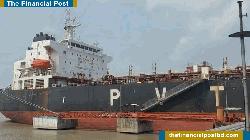
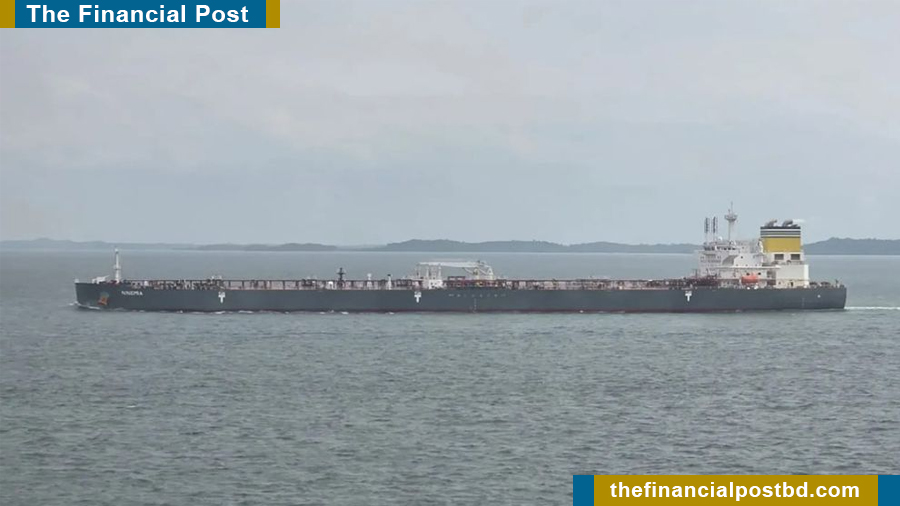
A vessel named “MT Ninemia” carrying 100,000 tons of crude oil has anchored at Kutubdia on Wednesday afternoon after more than two and a half months, marking a significant development for Bangladesh’s fuel supply chain.
Bangladesh Shipping Corporation (BSC) Managing Director Commodore Mahmudul Malek confirmed the matter, saying that unloading operations are expected to begin within one to two hours after completing necessary formalities.
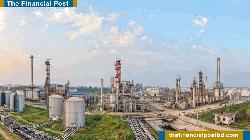
He added that the arrival of the cargo will pave the way for resuming full production at the Eastern Refinery Limited (ERL).
ERL, the country’s only state-owned refinery under the Bangladesh Petroleum Corporation (BPC), depends entirely on imported crude oil. Due to supply disruptions triggered by geopolitical tensions in the Middle East, the refinery had not received any crude since February 18, forcing a halt in its operations.
Officials said crude oil is imported under government-to-government (G2G) agreements from Saudi Arabia and the United Arab Emirates and transported through Bangladesh Shipping Corporation. However, prolonged instability in the region has disrupted shipping routes, while chartered vessels have faced increased security risks.
According to reports, another shipment of 100,000 tons of Saudi crude carried by the tanker “Nordic Polax” has been stranded near the Strait of Hormuz since April 5. In another case, a separate shipment from the UAE’s Jebel Dhanna port was cancelled after the vessel owner refused to sail due to security concerns.
As a result of the supply shortage, ERL’s main Crude Distillation Unit (CDU) has remained shut since April 12. With the new shipment now arriving, refinery operations are expected to resume shortly after unloading begins.
BPC data shows that Bangladesh’s annual fuel demand exceeds 7 million tons, with about 92 percent met through imports. Of this, roughly 1.5 million tons of crude oil is refined annually at ERL. The refinery processes two main types of crude: Saudi Arabia’s Arabian Light and UAE’s Murban crude.
FP/MI


 Circular economy key to Bangladesh’s industrial competitiveness: Minister
 BGB alerted over push-in concerns, says Home Minister
 Bangladeshi student found dead in Paris hostel
 Road safety crisis deepens as fatalities cross 400 in April
 Madrasa teacher sent to jail for sexually abusing 10-year-old student




 CDA Moves to Preserve 105 Heritage Structures in Chattogram
 DMP DC Masud Alam Appointed as SP in Chattogram
 Crude Oil Crisis Eases, Eastern Refinery Resumes Production
 Exchange Meeting Between CU Administration and Bangladesh Railway Delegation
 Slain Bangladeshi student Limon's body arrives in Dhaka