The government is set to bring motorcycles and battery-run auto-rickshaws under the advance income tax regime for the first time. Under the proposed budget for the 2026–27 fiscal year, motorcycles would face annual taxes ranging from Tk2,000 to Tk10,000 depending on engine capacity, while battery-run auto-rickshaws would be taxed between Tk1,000 and Tk5,000 based on operating area, according to Finance Ministry sources.
At present, advance income tax applies only to vehicles such as CNG-run auto-rickshaws, private cars, jeeps, buses, trucks and pickup vans. However, the government now plans to expand the system to include motorcycles and battery-powered auto-rickshaws. Finance Minister Amir Khasru Mahmud Chowdhury reportedly approved the proposal at a budget-related meeting on Monday.
Under the proposal, motorcycles up to 110cc would remain tax-free. Owners of 111cc–125cc motorcycles would have to pay Tk2,000 annually, those with 126cc–165cc bikes Tk5,000, and motorcycles above 165cc Tk10,000.
According to the latest Bangladesh Road Transport Authority (BRTA) data, there are currently 4.87 million registered motorcycles in the country. Although no official breakdown by engine capacity is available, estimates suggest around 3.8 million motorcycles could fall under the taxable category. If an average of Tk4,000 is collected from each taxable motorcycle, the government could earn roughly Tk15.2 billion annually.
Currently, motorcycle owners pay a one-time registration fee and road tax every two years. Registration fees range from Tk9,291 for motorcycles between 50cc and 125cc to Tk11,764 for motorcycles above 125cc, along with periodic road taxes.
Sector insiders warn that imposing advance income tax could reduce motorcycle sales and production, potentially discouraging fresh investment in the industry, which has seen significant growth over the past decade with local assembly of Honda, Yamaha, Suzuki, Bajaj and TVS models.
Honda Bangladesh Chief Marketing Officer Shah Md Ashikur Rahman said the proposed tax could affect ordinary users the most. “People who use 110cc motorcycles generally earn between Tk20,000 and Tk30,000 a month. For 125cc users, the average income is around Tk40,000. But those buying high-end motorcycles worth Tk600,000 as a hobby are in a different category,” he said.
Battery-run auto-rickshaws also under tax net
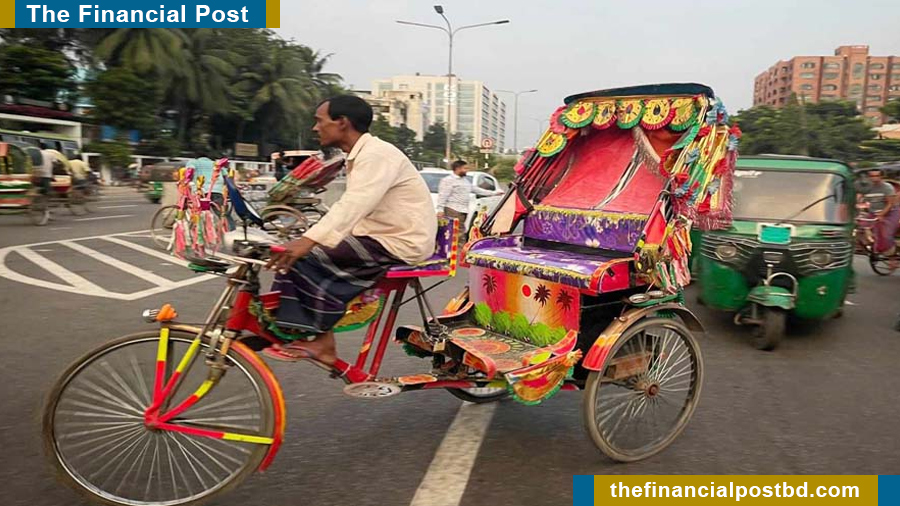
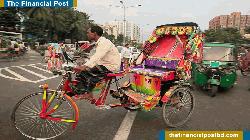
The government also plans to tax battery-run auto-rickshaws, with proposed annual rates of Tk5,000 for city corporation areas, Tk2,000 in municipalities and Tk1,000 at union level.
As these vehicles are largely unregistered, there is no official count nationwide. However, industry insiders estimate that at least five million battery-powered auto-rickshaws operate across Bangladesh, including 1.2 to 1.5 million in the capital alone.
To bring the sector under regulation, the government last year drafted the “Electric Three-Wheeler Management Policy 2025”, which proposed mandatory registration certificates, updated fitness certificates and tax tokens. It also mentioned the collection of duties and taxes at rates fixed by the National Board of Revenue (NBR).
Under the Income Tax Act 2023, vehicle owners are required to pay advance income tax during annual fitness renewal, which can later be adjusted against their income tax returns. Motorcycle and battery-run auto-rickshaw owners would similarly be able to adjust these taxes against future returns.
Former World Bank Dhaka office lead economist Dr Zahid Hossain said that advance tax creates an additional financial burden. “However, if someone can afford to buy a motorcycle, they should also have the capacity to pay some tax. Collecting it during registration or annual fitness renewal may be feasible from a revenue perspective,” he said.
He added, however, that bringing battery-run rickshaws into the tax net would be far more complicated due to the large number of unregistered vehicles. “The issue of revenue collection in this sector remains quite chaotic,” he said.
FP/MI


 Govt to launch probe into delay in measles vaccine procurement: Dr Zahed
 Importance of Nurses in Society and Healthcare—Views from Chattogram Officials
 July Uprising to inspire Bengalis for generations: Speaker
 Govt eyes annual tax on bikes, battery-run auto-rickshaws
 Man, son stabbed dead by family members over land row
  Divisional Commissioner Urges 100% Success of MR Vaccination Campaign
 Change for Your Children’s Future: DC Jahid Urges Prison Inmates
 CVASU Hosts Session on Redefining Fitness for a Healthier Body and Mind
 Press Conference Protests Tea Board Chairman’s Remarks on Tea Workers, Demands Retraction
 Ctg Port Begins First-Ever Safety Week to Strengthen Global Standards