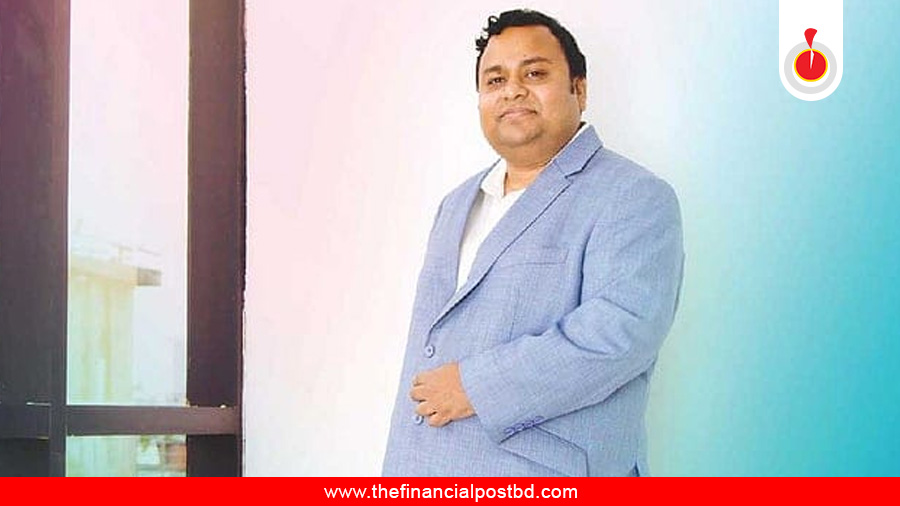
The Deal Alchemist: How Nafeez Sarafat Turned Global Scepticism into Foreign Capital for Bangladesh
His formula was neither luck nor conventional networking. It was a carefully constructed system of relentless engagement, institutional governance, global partnerships, risk-sharing and execution.
Foreign capital is difficult to attract—and even harder to retain.
Investors do not commit hundreds of millions of dollars merely because a country has a large population, competitive labour costs or an appealing presentation. Before signing a cheque, they examine the credibility of the local sponsor, the strength of corporate governance, the quality of the technology, the capability of the management team and, above all, the likelihood that the project will actually be completed.
Bangladesh has long struggled on these fronts. Although the country possesses compelling economic fundamentals, foreign direct investment remains modest relative to the size of its economy. Yet amid this difficult environment, Chowdhury Nafeez Sarafat succeeded in bringing together some of the world’s most demanding investors, lenders and development institutions.
General Electric of the United States. Nebras Power, owned by the Government of Qatar. Standard Chartered Bank London. The Asian Infrastructure Investment Bank. Germany’s DEG. The OPEC Fund for International Development. Switzerland’s export credit agency SERV. US private-equity giant KKR. And the United States Trade and Development Agency.
This was not simply fundraising. It was the creation of an international ecosystem of confidence around projects originating in Bangladesh. His success offers a rare case study in what foreign investors actually seek from a local partner.
The first secret: becoming the partner investors could rely on
Every major foreign investment begins with a question: Who is the person on the ground?
Global institutions need more than an intermediary who can arrange meetings. They seek a local partner with the fire to pursue a transaction for years, the adaptability to navigate changing circumstances and the ability to communicate with engineers, bankers, lawyers, regulators and government officials.
Sarafat brought these qualities together.
His early career in banking gave him an understanding of how financial institutions evaluate risk, structure transactions and make decisions. It also exposed him to the language of international banking: cash flows, covenants, compliance, securities, project risks and institutional accountability.
But technical knowledge alone does not close a cross-border transaction. Large deals frequently survive dozens of setbacks—changes in financing terms, legal complications, regulatory delays, technical revisions and shifts in investor appetite.
Sarafat’s defining quality was persistence. He maintained communication, adapted proposals, responded to concerns and returned repeatedly to the negotiating table. Where others might have interpreted a delayed decision as rejection, he treated it as another stage of negotiation.
His connections across banking, business and government helped him identify the right decision-makers. His speed allowed him to address problems before they became deal-breakers. His communication skills enabled foreign institutions to understand not only the opportunity, but also how the risks would be managed.
The apparent magic was, in reality, relentless preparation.
The second secret: turning governance into an investment asset
Investors do not invest only in projects. They invest in governance.
A promising business can become uninvestable when its accounts are unreliable, its board lacks independence or its decision-making structure depends entirely on one promoter. Sarafat understood that confidence had to be institutional rather than personal.
His approach was to engage recognised auditors (including Grant Thornton), qualified accountants, experienced advisers and reputable external professionals. Where specialised oversight was required, respected figures such as veteran banker K Mahmood Sattar, international tax expert Arjan Vanderlinde, prominent economist Dr. Jamal Uddin Ahmed were brought into board-level roles.
The principle was straightforward: a strong board signals that difficult questions can be asked, management decisions can be challenged and investor interests will not depend entirely on the assurances of the founding shareholder.
Independent directors, international-standard financial reporting and professional advisers helped convert governance from a compliance obligation into a competitive advantage.
For foreign lenders, this reduces information risk. For equity investors, it improves oversight. For development-finance institutions, it demonstrates that environmental, social and governance requirements can be implemented rather than merely promised.
Sarafat recognised that when a Bangladeshi company seeks international capital, the quality of its governance must be capable of surviving international scrutiny.
The third secret: building a moat around the project
Warren Buffett popularised the idea of an economic “moat”—a durable advantage that protects a business from failure and competition.
Sarafat applied a similar principle to project development.
When developing Unique Meghnaghat Power Limited, the easier approach might have been to minimise immediate capital expenditure by selecting lower-cost equipment and attempting to manage construction locally. Instead, the project appointed General Electric to deliver the plant on a turnkey engineering, procurement and construction basis (EPC).
GE’s contract was valued at approximately $350 million and included its advanced gas-turbine technology and associated generation systems. GE said the plant was designed to generate enough electricity to serve approximately 700,000 homes.
More importantly, the relationship went beyond the ordinary buyer-supplier model. GE’s participation as Shareholder placed the reputation, technology and execution capability of one of the world’s best-known industrial companies behind the project.
This created a powerful risk-mitigation structure.
A foreign investor considering Bangladesh no longer had to rely solely on the assurances of a local sponsor. It could assess the project alongside GE’s global technical reputation, equipment quality and engineering capabilities. The involvement of an internationally recognised contractor strengthened confidence that the plant could overcome construction and operational challenges.
Nebras Power subsequently acquired a 24% interest in Unique Meghnaghat Power Limited, making the project its entry into Bangladesh’s electricity market.
The transaction demonstrated Sarafat’s ability to align different participants around a common structure:
• The local sponsors contributed market knowledge and execution capacity.
• GE contributed technology, engineering and international credibility.
• Nebras Power contributed sovereign-backed foreign equity and power-sector expertise.
• International lenders supplied long-tenure project financing.
• Bangladesh gained a major piece of energy infrastructure.
Each participant reduced the risks faced by the others. That was the moat.
The fourth secret: replacing dependency with a world-class team
No promoter, however connected or energetic, can execute a complex international project alone.
Sarafat built teams combining local knowledge with global expertise. Professionals with experience at organisations such as Standard Chartered Bank, KPMG and Summit were brought together with international consultants, engineers and legal advisers.
This combination was essential.
Local professionals understood Bangladesh’s regulatory procedures, banking relationships, commercial realities and government decision-making process. International advisers understood the standards demanded by export-credit agencies, development banks and global investors.
Together, they could answer the questions that determine whether a project reaches financial close:
Is the project technically feasible? Are its contracts bankable? Are the financial assumptions defensible? Are the environmental and social safeguards acceptable? Can lenders enforce their rights? Can construction risks be allocated to parties capable of bearing them?
By filling the management structure with specialists rather than generalists, Sarafat reduced what international investors fear most: execution uncertainty.
His own role was not to replace the specialists, but to assemble them, maintain momentum and ensure that decisions were made.
The $463 million vote of confidence
The ultimate test of a project is whether sophisticated institutions are willing to risk their capital on it.
Unique Meghnaghat Power Limited secured a $463 million foreign-loan arrangement with a tenure of approximately 15 years. The financing involved Standard Chartered Bank alongside international development and institutional lenders, including AIIB, DEG, Swiss SERV and the OPEC Fund.
This was significant not merely because of the amount.
Long-term foreign-currency project finance is among the most demanding forms of capital. Before disbursement, lenders undertake extensive financial, technical, legal, environmental and commercial due diligence. They examine the sponsor, contractor, technology, project agreements, revenue model, government obligations and downside scenarios.
Securing such financing therefore represented more than a successful loan negotiation. It was an institutional endorsement of the structure Sarafat and his team had built.
The lenders were not investing in charm. They were investing in a project made credible through governance, engineering, contracts, risk allocation and professional execution.
From power plants to digital infrastructure
Sarafat later applied the same cross-border approach to telecommunications.
In May 2024, the US Trade and Development Agency awarded a feasibility-study grant to CdNet Communications Limited for the proposed Bangladesh International Submarine Cable, known as Bagha-1. The planned system is intended to increase international bandwidth, improve internet quality and strengthen the resilience of Bangladesh’s digital infrastructure.
The grant was particularly notable because USTDA does not ordinarily finance routine commercial activity. Its support is directed towards project preparation for infrastructure considered strategically and commercially significant.
The agency said the study would help CdNet evaluate the most effective route for developing a trusted subsea-cable system. It connected the initiative with wider US priorities concerning digital connectivity, cybersecurity and Indo-Pacific infrastructure.
Sarafat had therefore done something beyond attracting money. He had persuaded a US government agency to participate at the earliest and riskiest stage of developing a major telecommunications project.
That is often the stage at which transformative ideas fail. They may be commercially promising but lack the engineering studies, financial modelling and technical preparation necessary to become investable.
The USTDA grant provided a bridge between ambition and bankability.
The Sarafat formula
From the outside, the arrival of a global corporation, sovereign investor or international lender can appear almost magical.
But Sarafat’s method can be reduced to four disciplines:
First, relentless sponsorship. He remained engaged through repeated negotiations, changing conditions and extended decision-making cycles.
Second, institutional credibility. Strong boards, professional accounts, recognised auditors and specialist advisers allowed investors to rely on systems rather than personalities.
Third, intelligent risk-sharing. Bringing GE into the heart of the power project transformed an equipment contract into a broader foundation of technical confidence.
Fourth, execution capability. A management team combining Bangladeshi experience with international expertise gave investors confidence that commitments would become operating assets.
These elements reinforced one another. Relationships opened doors, but governance kept them open. Technology attracted attention, but professional management made it financeable. Persistence sustained negotiations, but risk allocation ultimately secured the capital.
The man who sold confidence
Sarafat’s greatest contribution may not be measured only by the dollars he helped bring into Bangladesh.
It lies in understanding what Bangladesh must sell before it can sell any project: confidence.
Confidence that contracts will be honoured. Confidence that financial information is credible. Confidence that qualified people are in charge. Confidence that globally recognised partners share the risk. Confidence that the local sponsor will remain present after the signing ceremony and continue working until the project is delivered.
Sarafat learned to package these assurances into a structure international institutions could accept.
That is why describing him simply as an investment banker or entrepreneur fails to capture the full story. His real skill was orchestration—bringing governments, industrial corporations, private-equity investors, commercial banks, development lenders, consultants and local stakeholders around the same table.
To observers, the outcome may resemble wizardry.
Yet behind the apparent magic was a disciplined formula: build trust, surround the project with excellence, remove every avoidable risk—and never stop pursuing the deal until global capital finally says yes.