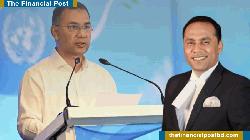
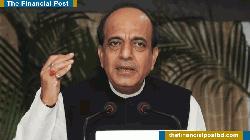
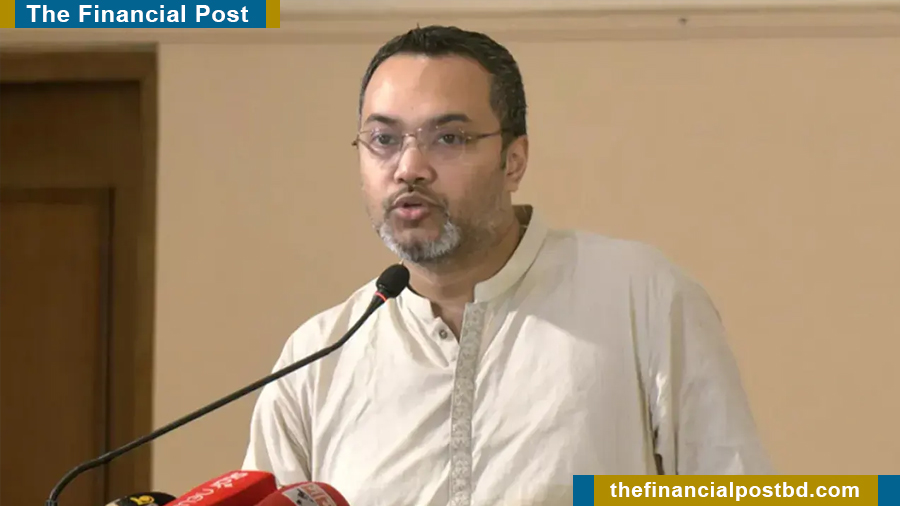
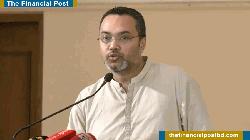
Prime Minister’s Adviser Mahdi Amin today said the proposed budget for fiscal year 2026-27 is a roadmap towards a democratic, humane and inclusive economy.
The proposed budget reflects the aspirations of people from almost all classes and professions, Mahdi, who also serves as spokesperson for the Prime Minister’s Office, wrote in a Facebook post.
He said the budget is people-friendly, welfare-oriented and visionary, and has been prepared on the basis of BNP’s election manifesto.
The government has taken important steps in 12 key sectors to democratise the economy, he said, adding these include education, health, employment and skills development, information and communication technology, creative economy, deregulation, agriculture and food security, social safety, women and children's welfare, transport infrastructure, power and energy, and environment and climate change.
“With the strength of democracy and the trust of the people, this budget will speed up Bangladesh’s journey towards a prosperous and self-reliant country,” he said.
Mahdi Amin said taxes on almost all daily essentials, including rice, lentils, fish, meat, sugar, salt, edible oil and spices, have been reduced to help control prices and ease the suffering of ordinary people.
“In the past, prices of many essentials would rise as soon as the budget was announced. The government hopes that this people-friendly budget will solve that problem,” he said.
He added that steps have been taken to make key medical services, including heart, kidney and eye treatment, as affordable as possible.
For farmers, fertiliser, seeds, irrigation, pesticides and insurance have been made easier to access, he said. Special support and incentives have also been provided to the solar and renewable energy sectors to help develop a sustainable energy system.
Mahdi Amin said the budget’s main goals are to increase investment, expand business and trade, provide bank loans on easy terms, and ensure employment-based growth.
He said the budget gives priority to youth and women’s empowerment through support for startups, freelancing, outsourcing, content creation and other technology-based businesses.
One of the key aims of the budget is to reduce operating expenditure and increase development expenditure so that public funds can be used more directly in productive sectors and public welfare, he said.
The budget also seeks to increase transactions, gradually bring the informal economy under a formal structure, expand the tax net, and build a sustainable foundation for inclusive and investment-led growth, PM’s adviser further added.
FP/MI


 Free train travel for senior citizens proposed in budget; also 25% off on metro
 TIB welcomes new provisions on black money, pay scale in new budget
 Schoolgirl ‘gang-raped’ in Dinajpur after abduction from Gaibandha
 Tigers roar to maiden ODI series triumph over Australia
 Budget FY27 a roadmap to inclusive economy: PM’s adviser
  A DNA Report Ends 27 Years of Deprivation, Restores Son's Identity
 Cricketer Nasir Hossain, wife Tamima acquitted in defamation case
 Messi scores from the spot as Argentina beat Iceland 3-0 in final World Cup warm-up
 Man stabbed to death, another injured in Chattogram
 Islami Bank is not Islam, Jamaat-e-Islami is not Islam: Home minister