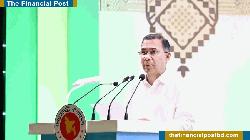
Fisheries and Livestock Minister Mohammad Amin Ur Rashid said on Sunday that Bangladesh currently has sufficient domestic production to meet the demand for sacrificial animals during Eid-ul-Azha, and there is no possibility of a shortage based on available data.
“The demand for sacrificial animals in Bangladesh will be slightly over 10 million. According to our reports, farmers across the country currently have more than that number of cattle, buffaloes, sheep, and goats combined,” he said.
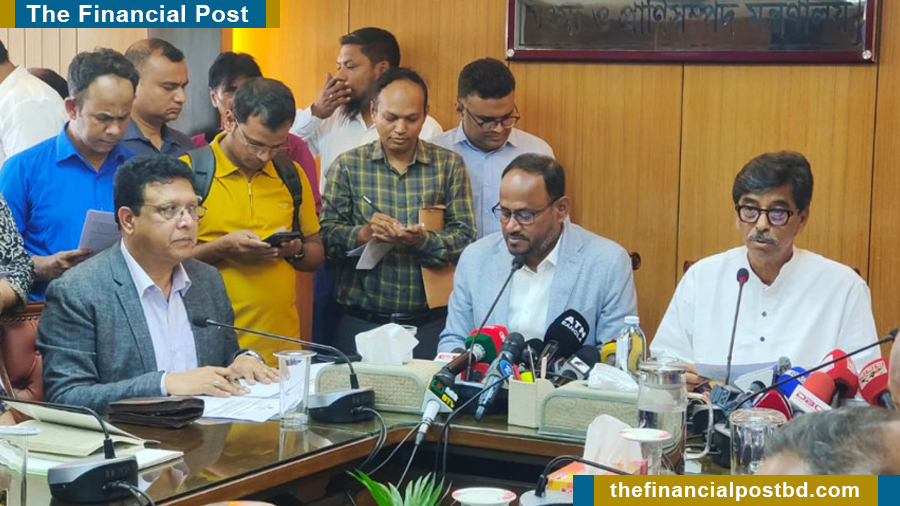
He made these remarks at a press conference held at the Secretariat on the occasion of Eid-ul-Azha 2026 to discuss demand assessment, supply, and measures to ensure smooth transportation and movement of sacrificial animals across the country.
The minister also said that a growing number of young entrepreneurs are engaging in livestock farming and selling animals online instead of bringing them to physical markets.
He said, “Many young people are raising cattle and goats but prefer to sell them online rather than taking them to markets. We have decided that no fees or taxes will be imposed on online transactions of cattle, goats, sheep, or buffaloes, as these sales do not take place in physical markets.”
He added that more than 3,600 cattle markets will be set up across the country while 16 cattle markets will be setup in DNCC and 11 in DSCC.
“As animals are often kept in crowded conditions in these markets, there is a risk that some may fall ill at any time. Therefore, our department will deploy veterinary doctors and personnel at every market to provide emergency medical support to farmers and traders,” he said.
Referring to concerns about the use of harmful substances, he said, “There is a common perception though I cannot confirm its accuracy that certain injections are used to artificially fatten animals.”
He further said that in the past, local production was aligned with domestic demand, particularly ahead of Eid-ul-Azha. However, the influx of cattle from neighboring countries during the festival season used to harm local farmers financially.
“We managed to control the situation to a large extent last year, and we expect even better control this year. Law enforcement agencies, including border forces and police, have assured us that they will take strict measures to prevent the entry of cattle from other countries to protect our farmers,” he added.
The minister also announced a key decision regarding border markets. “Some livestock markets are set up very close to border areas. We have decided that such border-side markets will no longer be allowed in the future. This will help address concerns that excessive trading in those markets distorts actual demand,” he said.
According to the latest data from the Department of Livestock Services, the total number of sacrificial animals available in the country this year is expected to reach 12,333,840. Of these, cattle and buffalo account for 5,695,878, goats and sheep for 6,632,307, and other species such as camels and dumba for 5,655.
On the other hand, based on divisional - level data, the maximum potential demand for sacrificial animals has been estimated at 10,106,334. Accordingly, the country is expected to have a surplus of 22,27,506 animals this year.
During the last Eid al-Azha, the total expected availability of sacrificial animals was 12,447,337. At that time, it was initially estimated that there could be a surplus of more than 2,068,000 animals. However, in reality, the number of animals sacrificed stood at 9,136,734, leaving an actual surplus of approximately 3,310,000 animals.
FP/MI





 DU teacher Sudip on 3-day remand over student Mimo’s suicide
 Home Minister admitted ‘political hypocrisy’, Law Minister misled parliament: Hasnat Abdullah
 10 die of measles, similar symptoms in 24 hours
 Rain and runoff trigger spawning activity in Halda river
 Fuel prices to remain unchanged in May
 Two vessels carrying 53,600 tonnes of diesel arrive at Ctg Port
 Measles likely to be under control by May: Health minister
 Fascist regime destroyed sectors including education, health: PM