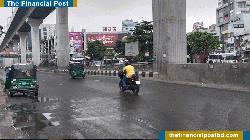
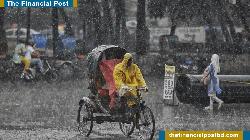
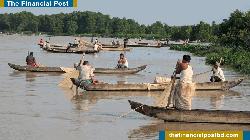
Continuous rainfall, hill runoff and lightning have triggered spawning of carp in the Halda river, with collectors reporting the presence of eggs at different points after the ebb tide began this afternoon.
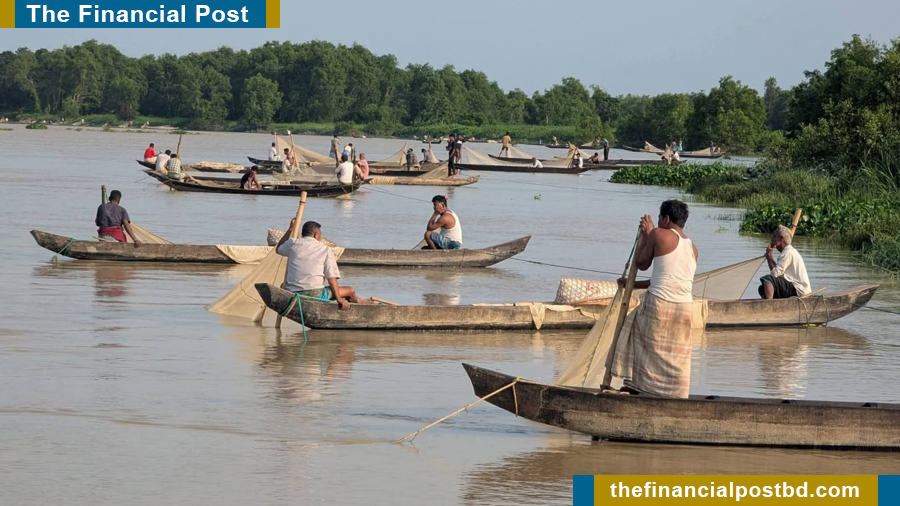
Salma Begum, district fisheries officer, told that brood fish usually spawn along a stretch between Madunaghat and Sattarghat in Raozan and Hathazari upazilas. Collectors have already started finding eggs at various points within this area.
She added that fish released sample eggs yesterday and in the early hours of today. However, the volume of collection remains low so far.
“Although brood fish have released eggs, the quantity collected is still very small. There is a possibility of full-scale spawning at night,” said Abul Fazal, an egg collector from Gorduar.
Collectors have begun gathering eggs and transporting them to hatcheries in buckets, Salma Begum said, adding that spawning has yet to reach full intensity.
“We are staying along the riverbanks,” she said.
Carp in the Halda typically spawn between the Bangla months of Chaitra and Ashar, particularly on full moon or new moon days when heavy rain, lightning and hill runoff occur together.
“Since today is a full moon, we expect fish to release eggs in full scale tonight,” she added.
Originating in Khagrachhari, the Halda flows about 98 kilometres through Fatikchhari, Raozan and Hathazari before meeting the Karnaphuli river.
Prof Manjurul Kibria, a Halda researcher and vice-chancellor of BGC Trust University Bangladesh, said a “spawning festival” may occur between 7:00pm and 8:00pm as ebb tide conditions prevail.
At least 400 collectors gather eggs from the Halda each year and produce fry, which are later supplied to farms across the country, although several thousand people are involved in the sector.
The Halda is the only natural river in the country where fertilised carp eggs can be collected directly, and its fry are widely valued nationwide for their rapid growth, Prof Kibria added.
According to data from the fisheries department, egg collection stood at 25,536kg in 2020, 8,500kg in 2021, 14,664kg in 2023, 1,680kg in 2024, and around 14,000kg in the most recent year.
FP/MI


 Society Before the Digital Mirror: Rethinking the Power, Impact, and Responsibility of Social Media
 City Submerged After Excess Rainfall; Three-Point Solution Proposed
 Govt taking steps to modernise coast guard: Home Minister
 11.89 lakh Rohingyas now in Bangladesh: Foreign Minister
 SC upholds bail for ex-chief justice Khairul Haque in five cases





 EC publishes gazette of elected women MPs to reserved seats
 Rain and runoff trigger spawning activity in Halda river
 No waterlogging occurred in Chattogram: LGRD State Minister
 Fuel prices to remain unchanged in May
 Measles likely to be under control by May: Health minister