At least 907 humanitarian workers were killed, injured, or kidnapped in 2025, according to the Aid Worker Security Database, cited by the United Nations Office for the Coordination of Humanitarian Affairs (OCHA).
Of them, 350 were killed, making 2025 the second-deadliest year on record after 2024, when 387 humanitarian workers were killed.
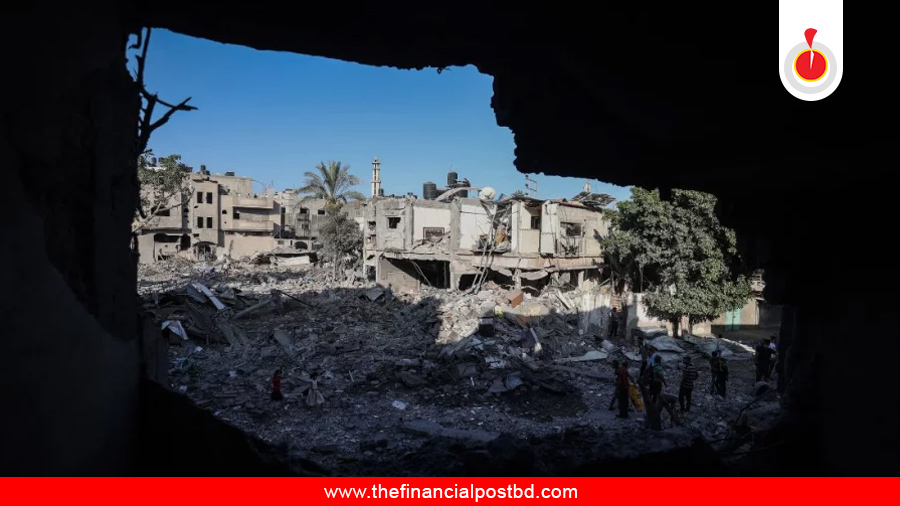
OCHA said Gaza remained the world’s most dangerous place for humanitarian workers for the third consecutive year, with 186 killed. Sudan followed with 71 deaths.
The United Nations released the figures on Wednesday as it marked World Humanitarian Day.
This year, the campaign is focusing on the families of aid workers who were killed while helping communities affected by conflict and crisis.
“Serving others has become more dangerous than ever,” UN Secretary-General António Guterres said in his World Humanitarian Day message.
More than 1,000 humanitarians have been killed in the last three years, Guterres said, adding that most were local staff supporting their own communities.
He said others had survived being shot at, shelled, bombed, kidnapped or sexually assaulted, while schools and hospitals were also coming under fire.
“Attacks on humanitarian workers are illegal,” Guterres said, calling on states to respect the rules of war, ensure safe humanitarian access, hold perpetrators accountable and provide sufficient resources.
UN humanitarian chief Tom Fletcher said the toll was “utterly unacceptable.”
“More than 1,000 aid workers have been killed in just three years, and that is utterly unacceptable,” Fletcher said, according to OCHA's World Humanitarian Day report.
The security situation is also changing because armed drones are now more common in conflicts.
OCHA said that humanitarian workers now face new dangers from armed drones, even in places where aid groups used to work far from the fighting.
This technology makes it harder for aid agencies to keep their convoys and staff safe and to reach people who need help.
The Aid Worker Security Database recorded 235 kidnappings, 280 detentions, and 322 cases of wounded aid workers in 2025, in addition to the 350 deaths.
The report notes that these numbers can overlap, since one worker might be involved in more than one type of incident.
Healthcare workers are also facing similar dangers, as the World Health Organization (WHO) said attacks on healthcare continue at an “unacceptable scale”, a decade after the UN Security Council adopted Resolution 2286 condemning attacks against medical facilities and personnel in conflict.
WHO has documented more than 10,400 attacks on healthcare across 29 countries and territories since December 2017, resulting in more than 5,700 deaths and 8,500 injuries.
So far in 2026, WHO has recorded 914 attacks on healthcare, causing 911 deaths and 1,486 injuries.
Most of the attacks have been reported in Ukraine, Lebanon, the occupied Palestinian territory and Myanmar, the agency said.
“Protecting health care means protecting lives, ensuring access to essential services and preserving the resilience of health systems when they are needed most,” WHO said.
These rising dangers are happening while the need for humanitarian help stays high and funding is not enough.
The UN said an estimated 252 million people will need urgent humanitarian assistance and protection by the end of May 2026.
Because of the funding gap, aid agencies have to focus on the most urgent needs and cut back on other programs, even as conflicts, displacement, and other crises continue.
Bangladesh is also feeling the effects of less funding. The country still hosts nearly 1.5 million Rohingya refugees who depend on international aid.
The UN and its partners have appealed for $710.5 million for the 2026 Rohingya response, targeting up to 1.56 million refugees and members of Bangladeshi host communities.
World Humanitarian Day is held on August 19 to honor aid workers and remember those who died while helping people affected by conflict and disasters.
This date also marks the 2003 bombing of the UN headquarters in Baghdad, where 22 people were killed.
Humanitarian workers are in more danger than before as conflicts around the world become more violent. Attacks on aid workers have reached record highs, making it harder for agencies to keep their staff safe and help people in need.
FP/F