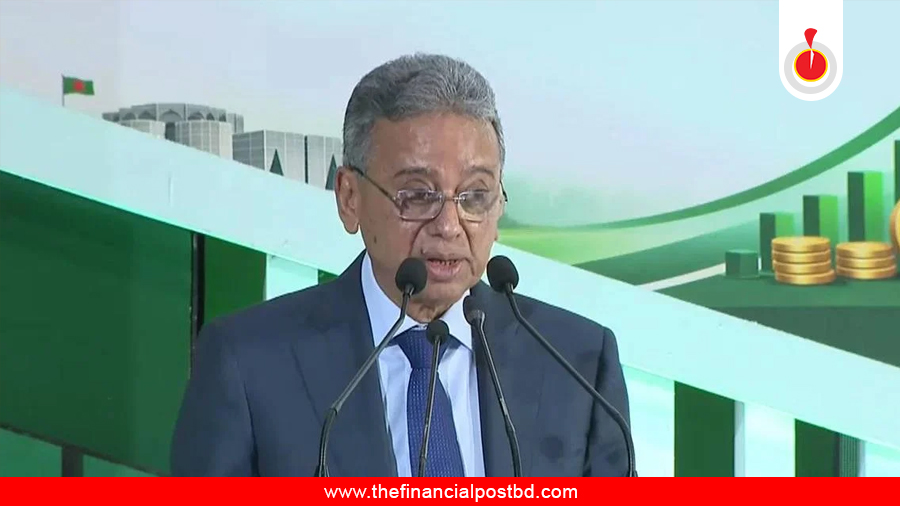
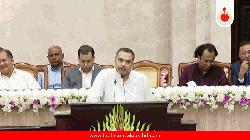
Finance and Planning Minister Amir Khosru Mahmud Chowdhury said Bangladesh needed to move from a debt-dependent economy to a self-financing one through major reforms in the revenue system.
He said the government would expand tax coverage, rationalize tax exemptions, curb tax evasion and avoidance and ensure full automation to boost revenue collection.
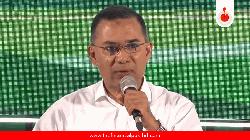
He made the remarks in his speech at the Revenue Conference-2026 at the Bangladesh-China Friendship Conference Center in Dhaka on Tuesday. Prime Minister Tarique Rahman attended the event as chief guest.
Khosru said the conference was not merely about reviewing revenue collection and accounting but also a platform for building national consensus on how to develop a prosperous Bangladesh through self-financing.
He said one of the major structural weaknesses of the country's revenue system was its extremely low tax-to-GDP ratio.
In the 2024-25 fiscal year, Bangladesh's tax-to-GDP ratio fell from 6.8% to 6.7%, he said, describing it as one of the lowest rates in the world.
In 2023, the average tax-to-GDP ratio in the Asia-Pacific region was 19.5%, while Bangladesh's was 7.2%, he said.
Khosru said the economy had expanded but the state's revenue-collection capacity had not increased accordingly.
“Tax coverage must be increased, tax exemptions must be rationalized, tax evasion and avoidance must be stopped, and taxpayer compliance must be increased through automation,” he said.
He said increasing the tax burden on existing taxpayers alone would not be enough to close the gap.
On reforms in revenue administration, Khosru said the government had taken a final decision to break up the existing National Board of Revenue (NBR) and replace it with two independent and transparent institutions.
One would be the Revenue Policy Department and the other the Revenue Management Department, he said.
FP/R