The government plans to form an independent media commission with quasi-judicial authority, similar to the UK's Ofcom or the US Federal Communications Commission (FCC), by uniting all mass media outlets.
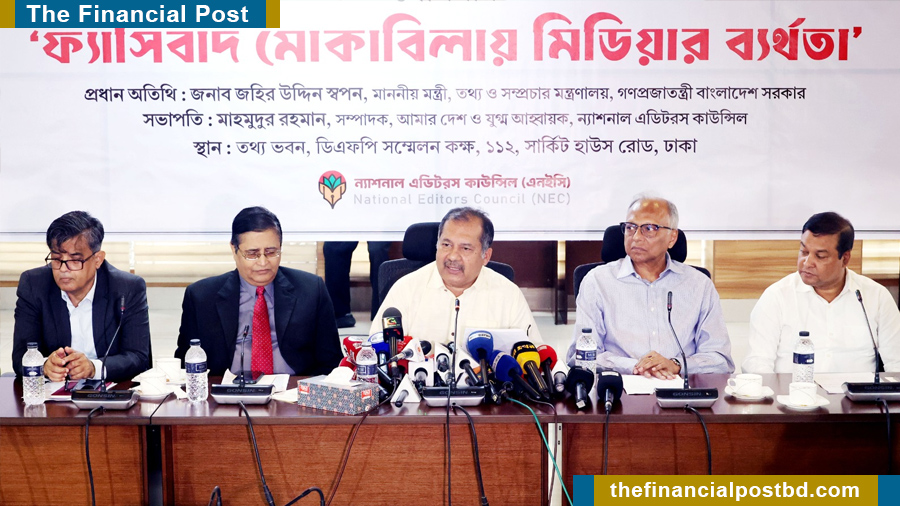
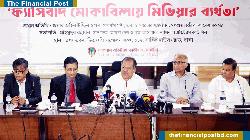
Information and Broadcasting Minister Zahir Uddin Swapan made the announcement today while addressing a seminar titled "Media's Failure in Confronting Fascism" as the chief guest.
The newly formed National Editors’ Council (NEC) organised the event at the Department of Films and Publications (DFP) conference room on Dhaka’s Circuit House Road, with Amar Desh Editor Mahmudur Rahman in the chair.
During the seminar, speakers demanded the identification and trial of individuals who used the guise of journalism to promote fascism over the past 15-17 years. Mahmudur Rahman specifically called for the criminal trial of "murderer and instigator" journalists.
The NEC was formed on June 2 with veteran journalist Shafik Rehman as convener and Mahmudur Rahman as joint convener. The platform includes editors from several newspapers, such as Naya Diganta, Kaler Kantho, Jugantor, Protidiner Bangladesh, Sangram, New Nation, and Waadaa. Today's seminar was marked as the council's inaugural event.
Speakers at the event recounted how the media was gagged during Sheikh Mujibur Rahman's BaKSAL era and Sheikh Hasina's Awami League regime. Shafiqul Alam, a council member and editor of Waadaa, said that all but four government-managed newspapers were shut down on June 16, 1975, to suppress news of 1.5 million deaths during the 1974 "man-made" famine.
Press Institute of Bangladesh (PIB) Director General Faruk Wasif compared fascism to a "pathorkuchi" plant that can easily regenerate.
Several speakers also strongly criticised the Editors' Council (Sampadak Parishad), labelling it an "elitist organisation".
Mokarram Hossain, editor of The New Nation, expressed hope that NEC representatives would now receive the same regular access to the head of state and ministers that the Editors' Council enjoys.
Elaborating on the proposed media commission, the information minister suggested it should be headed by a former chief justice, taking cues from the previous Press Commission report led by former prime minister Ataur Rahman Khan. He proposed that the commission could include representatives from the information and law ministries, the NEC, various journalist trade unions, and the Jatiya Press Club.
Calling for media unity to facilitate this process, Swapan noted that while journalists naturally hold different philosophies and compete ideologically, they must unite for the prosperity of the country and humanity.
In response to the minister's call for unity, Mahmudur Rahman set a strict condition in his closing remarks.
"We also want unity, but there is a precondition. Those who assisted in establishing fascism must go through self-purification. Furthermore, there is no scope to include those involved in murders or those who justified the July massacre. They must face criminal trials," Mahmudur said.
Jugantor Editor Abdul Hye Sikder moderated the seminar. Other speakers included Bangladesh Federal Union of Journalists (BFUJ) President Obaidur Rahman Shahin, Naya Diganta Editor Salahuddin Babar, and Dhaka Union of Journalists (DUJ) President Shahidul Islam, alongside editors and journalist leaders from various districts.
FP/MI


 Govt plans Ofcom- and FCC-style independent media commission: Info Minister
 Finance Minister proposes Tk2,000cr spending cut in revised budget for FY2026
 ‘Islami Bank to get new board soon’
 Dhaka summons Indian acting high commissioner over Zahed ur Rahman debacle
 BSF takes back 12 people stranded at no man’s land along Kushtia border




 Ex-IGP Benazir Ahmed arrested in Dubai
 Zaima Rahman Passes Bar Council MCQ Exam
 US beat Paraguay 4-1 in dream start for World Cup co-hosts
 Case filed over alleged assault on cricketer Nayeem; 3 cops withdrawn
 Prime Minister reaches Cox’s Bazar on daylong visit