Bangladesh is eyeing $2 billion in emergency aid from the IMF’s Rapid Financing Instrument (RFI) window to cushion the economic shock stemming from the Middle East war.
The RFI provides rapid, low-access financial assistance to countries facing urgent balance of payments needs that, if not addressed, would result in an immediate and severe economic disruption.
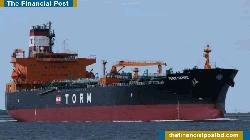
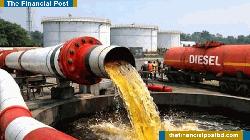
The Middle East war is an external shock to the Bangladesh economy, raising the import bill for fuel/LNG, fertiliser and food and increasing the subsidy and social protection pressures in real time.
As a result, there is an additional subsidy requirement of Tk 38,542 billion (about $3.2 billion) for March–June, risks of rapid reserve drawdown and tighter external financing conditions.
Funds under the RFI would provide bridge liquidity to preserve reserves while sustaining essential fuel, LNG, fertiliser and food imports; create fiscal space for targeted and time-bound support; and reduce the risk of disorderly adjustment.
In so doing, it would protect macroeconomic stability.
The Bangladesh delegation led by Finance Minister Amir Khosru Mahmud Chowdhury discussed availing the RFI during the International Monetary Fund–World Bank Spring Meetings in Washington DC last weeks.
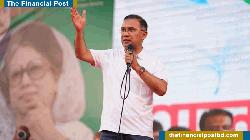
The formal request for funds under RFI, whose disbursement takes place in one go, will be sent once Prime Minister Tarique Rahman signs off on key conditions.
While funds under RFI would be provided without conditionality or reviews, a commitment to continuing with key reforms under the $5.5 billion loan programme is needed.
The government is weighing the implications of implementing the conditions for the emergency funding, the finance ministry officials.
The reforms that the IMF is insisting on are articulated in the Article IV Consultation in January.
The IMF pressed for continuation of tight monetary policy, further market-based exchange rate reforms, faster restructuring of weak banks asset quality reviews of state-owned banks and amendments to the Bangladesh Bank autonomy law.
The other conditions include reducing subsidies on electricity and fertiliser, and raising revenue collection by 0.7 percent of GDP in the next fiscal year.
Recent IMF Technical Assistance on tax policy indicates scope to raise revenue by more than 2 percent of GDP in the short-term through unifying the VAT rate at 15 percent and narrowing VAT exemptions; raising the minimum turnover tax rate to 2 percent and applying it to all companies; introducing a modern excise act for tobacco; and introducing excise taxes on imported motive fuels at the equivalent of $50 per tonne of greenhouse gas emissions plus the pollution cost, says the Article IV report.
Rationalising non-energy subsidies could help create fiscal space.
With no premium between the official and the market exchange rates, the remittance subsidy (about 0.15 percent of GDP) is no longer necessary to encourage repatriation through official channels and should be phased out.
A comprehensive strategy to optimise production capacity and adjust fertiliser prices would help reduce fertiliser subsidies, which reached 0.8 percent of GDP in fiscal 2024-25.
Enhancing targeted transfers while broadening the social safety net is vital to protecting the vulnerable, the IMF said.
The authorities have consolidated social programmes from 150 to 95 and improved beneficiary eligibility. However, the coverage of the poor population is low. The recently started development of a dynamic social registry will support better targeting and coverage of social assistance.
In the near-term, the government could use the poverty map to inform the allocation of social transfers while rationalising energy tariffs.
The Bangladesh Bank should establish procedures for bank viability assessments and engage reputable local and international experts to support restructuring/resolution work and strengthen operational capacity.
Non-viable banks should not be merged before cleaning up their balance sheets and evaluating the cost of integrating banks and their systems.
FP/MI






 EC clears 36 BNP candidates for reserved seats
 Dhaka seeks stronger ties with Africa under Tarique Rahman govt
 7,000 tonnes of diesel from India reaches Dinajpur
 Bangladesh gives passport to 22,000 Rohingyas living in Saudi Arabia
 SSC, equivalent exams begin Tuesday
 Health Minister inaugurates nationwide measles-rubella vaccination campaign
 Trump says US delegation heading to Pakistan for Iran talks
 12 Feb election established voting rights of people: PM