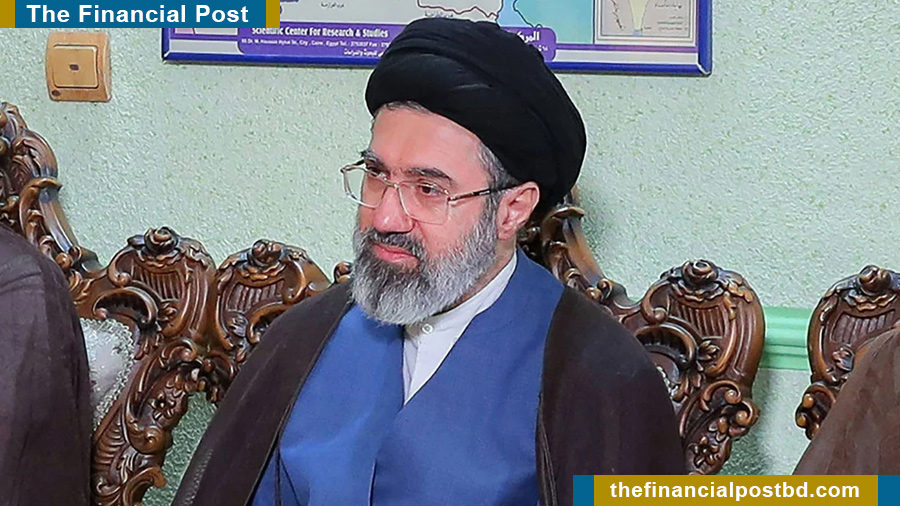
Iran has appointed Mojtaba Khamenei, the second son of slain supreme leader Ayatollah Ali Khamenei, as the country’s new supreme leader, according to reports carried by Iranian state media.
The development marks a significant political transition in Iran following the assassination of Ali Khamenei amid the ongoing regional conflict.
Mojtaba Khamenei, 56, has long been regarded as a powerful figure within the country’s political and religious establishment, despite never holding elected office or publicly campaigning for leadership.
Although he has remained largely out of the public spotlight, Mojtaba has spent decades operating within the inner circle of the former supreme leader.
Analysts say he cultivated strong relationships with senior figures in the Islamic Revolutionary Guard Corps (IRGC) and other key institutions that play influential roles in Iran’s political system.
Throughout his father’s leadership, Mojtaba Khamenei was widely believed to wield considerable influence behind the scenes, particularly within the supreme leader’s office and among conservative political networks.
His selection as supreme leader comes despite the fact that he has never been subjected to a public vote or electoral process, reflecting the structure of Iran’s political system in which the country’s highest authority is appointed through the clerical establishment rather than through direct elections.
The issue of succession has historically been highly sensitive in Iran. Mojtaba himself has rarely spoken publicly about the prospect of succeeding his father.
Observers have noted that his rise to the country’s highest political and religious position could raise questions about the emergence of a dynastic leadership structure, drawing comparisons with the Pahlavi monarchy that ruled Iran prior to the 1979 Islamic Revolution.
Supporters, however, argue that Mojtaba’s longstanding connections with influential political and security institutions may provide continuity during a period of significant regional and domestic uncertainty.
FP/A


 Who is Hisham Abugharbeih, in custody over Bangladeshi student’s death in US?
 Govt aims to build creative and responsible workforce: PM
 US suspends immigrant visas for citizens of 75 countries, including Bangladesh
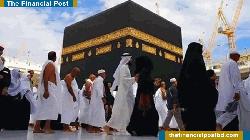 32,532 Bangladeshi Hajj pilgrims reach Saudi Arabia
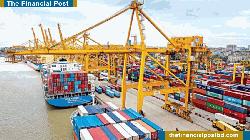 Chattogram port keeps national economy afloat for 139 years



 Arrest warrant issued against MP Amir Hamza
 Police uniform colours set for another change
 Dhaka to experience load shedding experimentally: State minister
 US announces ceasefire extension with Iran
 Govt clears purchase of 1.75 lakh tonnes of fuel oil