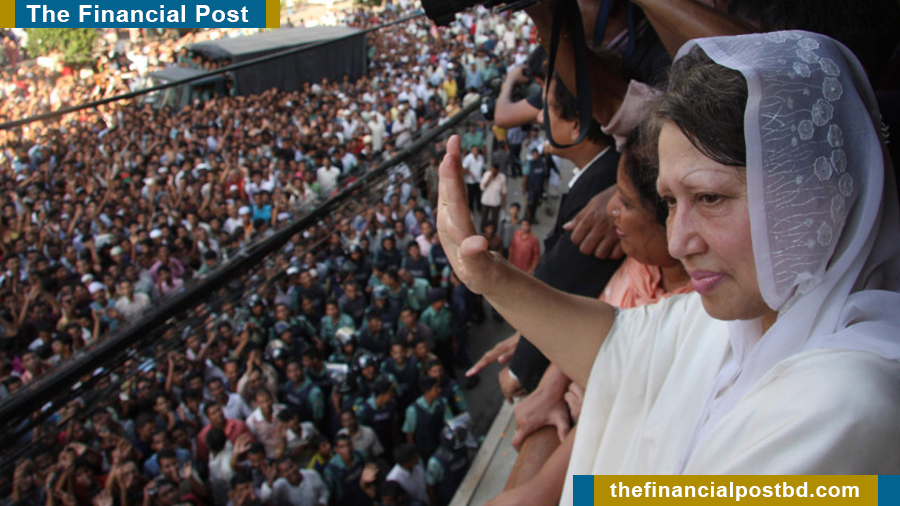
One of the iconic figures in Bangladesh’s political history, BNP Chairperson and three-time former Prime Minister Begum Khaleda Zia, known as an uncompromising leader, lifelong fighter and true patriot, passed away on Tuesday morning. She was 80.
Her long and turbulent political journey came to a solemn end at 6:00am on Tuesday at Evercare Hospital, where she had been receiving treatment for 37 days.
“The BNP Chairperson breathed her last at 6:00am,” AKM Wahiduzzaman, the party’s ICT Affairs Secretary, said early in the morning. Her death was later confirmed by the medical board and senior party leaders.
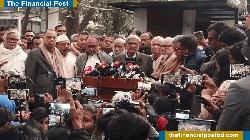
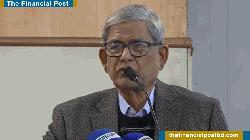
“It is with a heavy heart that we announce the passing of our esteemed Chairperson,” said BNP Secretary General Mirza Fakhrul, his voice choked with emotion.
She is survived by her eldest son Tarique Rahman, three granddaughters, and millions of supporters and admirers. Her long political career has left a lasting mark on Bangladesh’s political landscape and inspired generations.
Shockwave in Winter Morning
Widow of slain President and BNP founder Ziaur Rahman, Khaleda Zia had long been woven into the fabric of Bangladesh’s political drama — its rises, ruptures, hopes, and hostilities. Her final months were marked by an unrelenting battle against pneumonia, chronic lung infections and persistent cardiac complications.
News of her death spread quickly through the city in the early hours, cutting through the cold winter morning and heavy fog. People across the country were stunned. Silence fell, while scenes of grief unfolded inside and outside the hospital.
A deep sense of grief swept across Bangladesh with condolence messages pouring in from leaders at home and abroad.
The BNP announced seven days of mourning over the death of its long-time leader. The government has declared three days of national mourning, including a general holiday on Wednesday.
As per the BNP Standing Committee’s decision, Khaleda Zia’s namaz-e-janaza will be held at 2:00pm on Wednesday at the South Plaza of the National Parliament and Manik Mia Avenue in the capital.
She will be buried with full state honours at Chandrima Udyan beside the grave of her husband, former President Ziaur Rahman, at 3:30pm.
Khaleda Zia led the BNP for 41 years and earned the title of the ‘uncompromising leader’ during the anti-autocracy movement of the 1990s. She served as a Member of Parliament five times -- Prime Minister three times and Leader of the Opposition twice.
Starting her political journey as a homemaker, Khaleda spent much of her over four-decade political life on the streets, leading movements and facing arrests and imprisonment, but never leaving the country. She never lost an election she contested.
The BNP chief had been suffering from multiple chronic illnesses, including liver and kidney complications, heart disease, high blood pressure, diabetes, arthritis and infections.
She was admitted to Evercare Hospital on November 23. As her condition worsened, her elder son, BNP Acting Chairman Tarique Rahman, and other family members rushed to the hospital late Monday night.
Shortly after 2:00am, Khaleda Zia’s personal physician, AZM Zahid Hossain, told reporters that she was passing through an ‘extremely critical time’ and requested the nation to pray for her recovery. A few hours later, doctors declared her dead.
Family members, including Tarique Rahman, his wife Zubaida Rahman, their daughter Zaima Rahman, the family of her late son Arafat Rahman Koko, her siblings, and BNP Secretary General Mirza Fakhrul Islam Alamgir, were present at the hospital at the time.
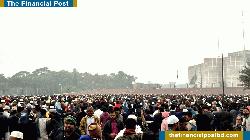
Doctors, nurses and hospital staff were seen in tears as the news broke. The news spread rapidly on social media, with people from all walks of life expressing grief. BNP leaders, activists and supporters gathered outside the hospital in large numbers.
At around 9am, the head of the medical board Prof Shahabuddin Talukder said with a choked voice that the medical team tried their best for more than a month, but Khaleda Zia was declared clinically dead at 6:00am.
BNP Secretary General Mirza Fakhrul Islam Alamgir said the loss is ‘irreparable’ and something the nation would never be able to overcome.
Govt’s Reactions
Fakhrul said Chief Adviser Muhammad Yunus had called him to express condolences. BNP Senior Joint Secretary General Ruhul Kabir Rizvi announced a seven-day mourning programme following the death of Khaleda.
As part of the programme, black flags will be hoisted at all party offices across the country for a week starting Tuesday while party leaders and activists will wear black badges and Quran khatam and prayers will be held nationwide during the period.
Condolence books were opened at BNP’s central office, Chairperson’s Gulshan office and other party offices across the country.
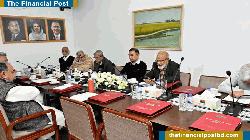
An emergency meeting of the Advisory Council was held in the afternoon, where Mirza Fakhrul attended as a special guest. The meeting began with a minute’s silence, and decisions were taken regarding state mourning and funeral arrangements.
Law Adviser Asif Nazrul said Khaleda Zia’s contribution to the country would remain unforgettable.
The BNP Standing Committee also held an emergency meeting chaired by Tarique Rahman. BNP offices at Naya Paltan, Gulshan and elsewhere witnessed emotional scenes as leaders and supporters broke down in tears.
Tarique’s Tributes
Meanwhile, Tarique Rahman paid an emotional tribute to Khaleda, remembering her as a tender and loving mother who was also a steadfast guardian for her family and the nation.
“My mother, BNP Chairperson Begum Khaleda Zia, has responded to the call of Almighty Allah and left us today. Inna lillahi wa inna ilayhi raji'un (Indeed, we belong to Allah, and to Him we shall return),” he wrote in an emotional post on his verified Facebook page.
To many, he said, she was the leader of the nation, an uncompromising leader, the ‘Mother of Democracy’, the ‘Mother of Bangladesh’.
“To me, Khaleda Zia was a tender and loving mother who devoted her entire life to the country and its people. Throughout her life, she stood firm against autocracy, fascism, and domination, leading the struggle for freedom, sovereignty, and the restoration of democracy,” he said.
Though her life was illuminated by sacrifice and struggle, Tarique said at home Khaleda was their truest guardian, a mother whose infinite love gave them strength in their darkest moments.
He said Khaleda endured repeated arrests, denial of medical care, and relentless persecution. “Yet even in pain, confinement, and uncertainty, she never stopped sheltering her family with courage and compassion. Her resilience was not loud, but it was unbreakable.”
For the country, Tarique said she lost her husband and lost her child. “In that loss, this nation and its people became her family, her purpose, her very soul. She leaves behind an unforgettable legacy of patriotism, sacrifice, and resistance, a legacy that will live on in the democratic conscience of Bangladesh.”
Khaleda’s Legacy
Khaleda Zia leaves behind a legacy as a steadfast leader, a symbol of resilience and patriotism, and one of the most influential states persons in Bangladesh’s history.
History rarely announces its chosen figures in advance. BNP Chairperson Khaleda Zia has proven it. Her life was a testament to resilience, determination and leadership, marked by an unwavering commitment to democracy and deep patriotism.
Starting as a homemaker, she entered politics seven months after the assassination of her husband, late President and BNP founder Ziaur Rahman and rose to become Bangladesh’s first female Prime Minister in less than a decade.
Over a political career spanning nearly 43 years, she faced personal tragedies, imprisonment and political turbulence, yet remained a steadfast leader and a unifying symbol of democracy in Bangladesh.
She led the Bangladesh Nationalist Party (BNP) for 41 consecutive years as its chairperson, shaping not only her own remarkable political journey but also the course of the nation’s turbulent politics.
Khaleda Zia, who entered politics with no prior political experience following the assassination of her husband and BNP founder Ziaur Rahman in 1981, went on to shape a remarkable 43-year political journey.
Analysts describe her as a charismatic and uncompromising leader. She led a long struggle against military rule under HM Ershad, forming a seven-party alliance that played a key role in his fall.
Her political journey was not without hardships. She endured imprisonment, family tragedies—including the deaths of her husband and younger son, Arafat Rahman Koko—and repeated political harassment.
Even when the army-backed government in 2007 offered her opportunities to return to power or to go abroad, she firmly refused, saying that Bangladesh was her only home and the place where she wished to live until her death. Through this stance, she emerged as a symbol of resilience, integrity and national unity.
Khaleda Zia was also known for her pragmatic approach. She supported dialogue and compromise when necessary, including the introduction of a neutral caretaker government system into the constitution, even when initially opposed within her party.
She skillfully led BNP through multiple alliances, protests and elections, balancing strategic decisions with her principles.
From Putul to Unifying Figure
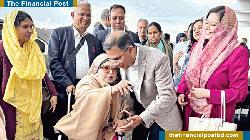
Born on August 15, 1945, as Khaleda Khan and nicknamed ‘Putul’ by her family, she married Ziaur Rahman in 1960 and became a widow at 36, raising her two sons, Tarique Rahman and Arafat Rahman, while gradually emerging as a decisive political leader.
Throughout her leadership of BNP, Khaleda Zia earned respect not only from her followers but also across political parties. Analysts describe her as a unifying figure, a champion of democracy, and a symbol of perseverance who transformed Bangladesh’s political landscape, paving the way for women to lead at the highest level.
Khaleda Zia was admitted to Evercare Hospital on November 23 due to heart and lung infections and passed away at 6:00 pm on Tuesday.
She was nominated for three constituencies—Dinajpur-3, Feni-1 and Bogura-7—for the upcoming 13th parliamentary election, although her party also fielded alternative candidates in view of her critical health condition.
FP/MI