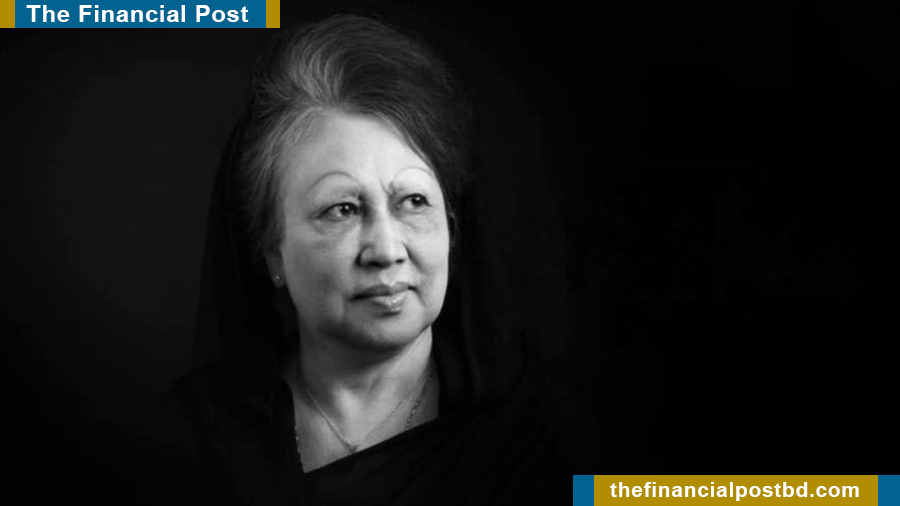
Bangladesh is mourning the passing of Begum Khaleda Zia, the country's first female prime minister and one of the most influential figures in its political history. Her death marks not only the end of a long and turbulent political chapter, but also a moment of collective reflection on leadership, resilience, and the struggle for democracy. Khaleda Zia passed away on December 30, 2025, at the age of 79. She breathed her last at around 6am, today, at Dhaka's Evercare Hospital after a prolonged illness.
Across social media, voices from Bangladesh's cultural and creative community expressed grief and reverence, underscoring how Khaleda Zia's presence extended beyond politics into the national psyche.
Actress Azmeri Haque Badhan described the former prime minister as a defining figure in Bangladesh's political journey. In a solemn message, she wrote that Khaleda Zia's leadership and years of public service left a lasting imprint on the nation, adding that the grace with which she carried herself – even through hardship, would be remembered. Badhan extended condolences to the family and prayed for peace and mercy for the departed leader.
From another corner of the cultural landscape, actress Jaya Ahsan reflected on the historical weight of Khaleda Zia's absence. Writing in Bangla, Ahsan noted that the former prime minister departed at a particularly difficult moment for the country, with elections ahead and people waiting for democratic renewal. She described Khaleda Zia as a central figure in the movements against military rule and for the restoration of democracy, adding that with her passing, a long chapter of the nation's political struggle had come to an end.
Film star Shakib Khan expressed deep sorrow at Khaleda Zia's death, offering prayers for the forgiveness of her soul and condolences to her family. His brief but solemn message echoed a sentiment shared widely across the country: a recognition of loss beyond political affiliations.
Filmmaker Ashfaque Nipun highlighted Khaleda Zia's resilience, describing her as a symbol of elegance and endurance, even in moments when she was dehumanised by political opponents. He wrote that the nation would always remember her with pride.
Singer Kanak Chapa offered one of the most impassioned tributes, calling Khaleda Zia an uncompromising and undisputed leader. In a deeply emotional post, she wrote of Khaleda Zia's refusal to compromise with injustice, her sacrifices for the country, and the personal suffering she endured. Kanak Chapa lamented that the former prime minister could not end her life in peace and described her as an "unconquerable life warrior," praying that she be granted Jannatul Ferdous.
Actress Apu Biswas described Khaleda Zia's passing as a moment that would remain etched in the nation's collective memory. Paying tribute to Bangladesh's first female prime minister, she offered her respect and condolences, calling the departure of such a leader an event of historical magnitude.
Television actor Ziaul Faruq Apurba shared news of Khaleda Zia's death in the early hours of the morning, noting that she passed away shortly after Fajr prayers. He prayed for her forgiveness and for Allah to grant her Jannah.
Khaleda Zia's political life was defined by resistance, leadership, and prolonged confrontation with authoritarianism. As a key figure in the anti-military movement and a central architect of Bangladesh's democratic transitions, her role in shaping modern political discourse remains indisputable. Her presence symbolised opposition, resilience, and the enduring possibility of political plurality.
The tributes from artistes, actors, and filmmakers reflect how deeply her life and legacy resonated beyond party lines. In mourning her death, the nation is not only bidding farewell to a former prime minister, but also closing a defining chapter in its political and cultural history. As Bangladesh waits at another crossroads, the memory of Khaleda Zia; her courage, endurance, and unyielding presence – continues to loom large.
FP/MI