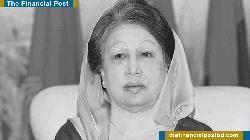
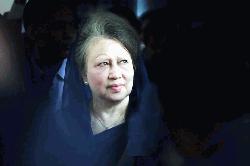
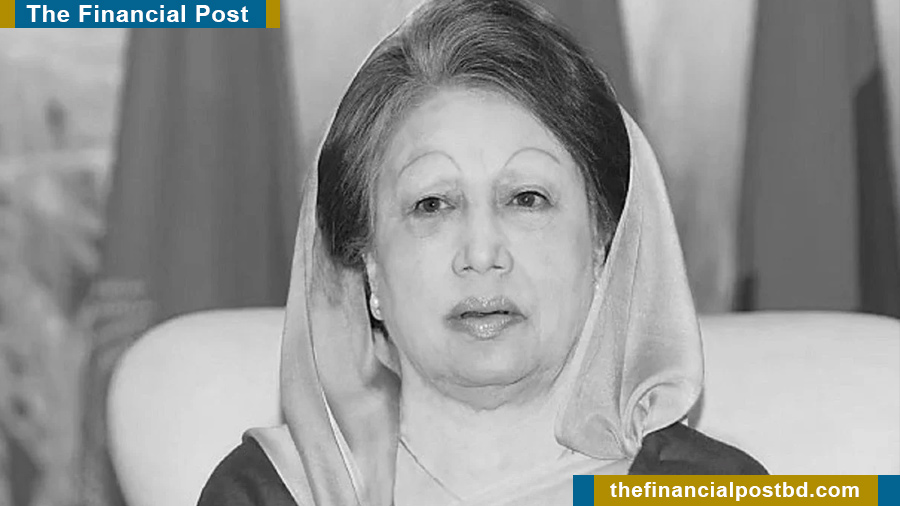
Khaleda Zia has left behind a nation that she helped shape—first as a reluctant icon of democracy, and later as an enduring leader in a fiercely contested political sphere. She was not groomed for the jagged edges of politics. Yet, she became a defining figure of Bangladesh's democratic struggle, navigating the transition from a domestic life in the shadows to the very centre of power.
It was only after the assassination of her husband in 1981—with the BNP leaderless and fractured—that she stepped into the void. At the time, she had little political experience, facing stiff opposition from factions within her own party. Senior BNP leaders, many of whom were seasoned politicians, doubted her capability, and the party was on the brink of disintegration after the elderly Justice Abdus Sattar was ousted. Despite this internal scepticism and the formidable might of HM Ershad's military regime, she took the helm in 1984.
What emerged from her personal tragedy, her husband's death, was a leader of startling resolve. On the streets of Dhaka in the 1980s, Khaleda became the "uncompromising leader," a moniker earned by her refusal to negotiate with the Ershad regime. She was detained repeatedly, yet her obduracy became her greatest political asset. It culminated in the 1991 general election, where she led the BNP to a stunning victory, becoming Bangladesh's first female prime minister.
In a rare moment of unity that altered the course of Bangladesh's history, Khaleda made one of her most significant political compromises by joining forces with her arch-rival, Sheikh Hasina, in 1990. She agreed to a strategic liaison to oust Ershad. This decision to sit at the same table and formulate a joint declaration was significant. That period also marked a seminal shift in the country's history. Khaleda presided over the transition from presidential to parliamentary government, a structural change intended to anchor democracy.
Khaleda's administration in 1996 navigated a volatile political impasse to institutionalise a fair transfer of power. Amidst violent boycotts and demands for a neutral electoral overseer, she formed the short-lived 6th parliament and passed the 13th amendment to the constitution. This amendment formally embedded the caretaker government system into law. Then she promptly dissolved the parliament and resigned, only to run for re-election under the very neutral authority she had just empowered. That election brought the Awami League, not the BNP, to power. Still, Khaleda won all the seats she contested. Khaleda, a three-time prime minister, possessed a singular electoral magic: she remains the only political leader in the country's history to have won every single parliamentary seat she ever contested.
Her administration's most enduring structural legacy was its pivot toward economic liberalisation and social equity. Guided by her finance minister, M Saifur Rahman, Khaleda introduced the value-added tax (VAT) in 1991—a difficult reform that permanently expanded the state's revenue base—and moved to deregulate the banking sector.
But it was in the classroom where she altered the nation's social fabric to some extent. Recognising that development was impossible without women, her government launched a nationwide stipend programme in 1994 that made secondary education free for girls in rural areas.
In 2001, Khaleda orchestrated a stunning political comeback, leading her four-party alliance to a landslide victory that secured a two-thirds majority in parliament. This triumph was a rejection of the incumbent Awami League as well as a validation of her controversial strategic pivot -- an electoral coalition with conservative Islamist parties.
Her legacy is not without deep fissures. Her career was defined by a bitter, decades-long duel with Hasina and the Awami League, a rivalry that often paralysed the state. Her last tenure was punctuated by the intervention of an army-backed government in 2007 that saw both of them jailed. By late 2006, the country's democratic machinery had ground to a violent halt. As Khaleda's third term ended, a deadlock over who would head the interim caretaker government spilt onto the streets, turning Dhaka into a battleground.
In January 2015, Khaleda found herself in a siege-like state, her Gulshan office barricaded by police trucks loaded with sand to prevent her from leading anti-government protests. It was during this enforced isolation that she received the devastating news of the death of her younger son, Arafat Rahman Koko, in Malaysia. Her personal tragedy was compounded by the politics of the moment; cut off from her family and the public, she was forced to mourn in isolation. The situation turned surreal when Hasina, the then prime minister, arrived at the gates to offer condolences, only to be turned away from the locked entrance.
The trajectory of Khaleda's final decade was tragic, yet ended with a twist of historical irony. In 2018, she was sentenced to prison on corruption charges involving the Zia Orphanage Trust—charges many decried as a politically motivated tool to keep her away from elections.
For over two years, beginning in February 2018, Khaleda was the sole inmate of the abandoned Old Dhaka Central Jail on Nazimuddin Road. While the rest of the prison population had been relocated to a new facility in Keraniganj, she remained isolated in a dilapidated room of the colonial-era structure. This period of incarceration was marked by a profound loneliness that her party and international observers frequently described as solitary confinement. Cut off from the outside world and battling cascading health issues, she spent 760 days in this emptiness.
In those years, it seemed her story would end in a prison cell, her voice absent from parliament since 2014. Under the increasingly authoritarian regime led by Hasina, she was effectively silenced, and her party was hollowed out. Even after a conditional release in 2020 amid the COVID-19 pandemic, she remained confined to her home in Gulshan, a shadow of the figure who once commanded millions.
But the wheel turned one last time. Following the massive student-led uprising in 2024 that toppled Hasina's regime, Khaleda saw her political image resurrected. She was completely freed in August 2024 after Muhammad Yunus took over as the country's interim leader. She witnessed the fall of the government that had jailed her. And her political enemy, Hasina, was sentenced to death in absentia for "crimes against humanity" in November 2025.
In the days following the dramatic collapse of the Awami League government in 2024, Khaleda's most defining political act was perhaps her silence. While her party faithful celebrated the ouster of Hasina in the streets, Khaleda refrained from issuing a single public statement of personal gloating or vindictiveness against the woman who had jailed her. Even in her first public address after six years of silence—delivered via video link from a hospital bed—she notably avoided mentioning her rival's name in anger. Instead, she urged the nation to reject the "politics of vengeance" and destruction, choosing to focus her fading energy on a call for peace rather than settling the score with the nemesis who had fled.
Khaleda's health had been in steep decline for years. By the time she was last admitted to Evercare on November 23, 2025, with heart and lung infections, she was already navigating life with a pacemaker and the scars of previous stenting procedures.
Khaleda's eldest son, Tarique Rahman, remains the undisputed heir apparent to her political dynasty, serving as the acting chairman of the BNP from London, where he was in exile since 2008. The fall of the Hasina regime in August 2024 led to his acquittal in multiple high-profile cases and he returned home on December 25. In January 2025, Khaleda travelled to the UK for advanced medical treatment. That visit marked a temporary reunion—their first in seven years. Khaleda's health reached a critical crisis point in late 2025, with the party rank-and-file waiting anxiously for their leader to end his 17-year physical detachment from Bangladesh. While the interim government signalled a willingness to facilitate his homecoming, Tarique's delay, attributed to lingering security concerns and strategic timing for the upcoming elections, created a poignant backdrop to his mother's final battles.
Today, the focus will inevitably turn to the vacuum she leaves in the BNP. But for a moment, the nation pauses to mark the passing of a person who walked out of the domestic sphere to topple a dictator. In the years that followed, she was tenacious in political survival and grit. She survived through imprisonment, the isolation of the pandemic, the death of her younger son, and the systematic dismantling of her party. She emerged not as a vanquished prisoner, but as a unifying force for the party and millions of supporters. Khaleda may have lost her health to the struggle, but she died having secured her indelible place in history.


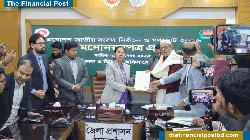 Mirza Fakhrul submits nomination for Thakurgaon-1
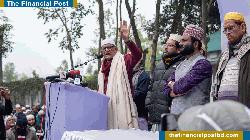 BNP will not enact any law opposing the Qur'an and Sunnah: Mirza Fakhrul
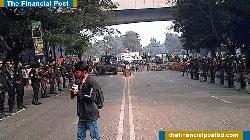 Security tightened at Zia Udyan, Savar National Memorial ahead of Tarique’s visit
 India closely monitoring situation in Bangladesh: Jaiswal
 Tarique’s nomination papers submitted for Dhaka-17 seat



 Global media coverage on Khaleda’s demise
 BNP announces 7-day mourning
 Khaleda Zia's funeral likely tomorrow; burial beside Ziaur Rahman under consideration
 Chinese Premier expresses condolences over death of Khaleda Zia
 Nation loses a great guardian: CA