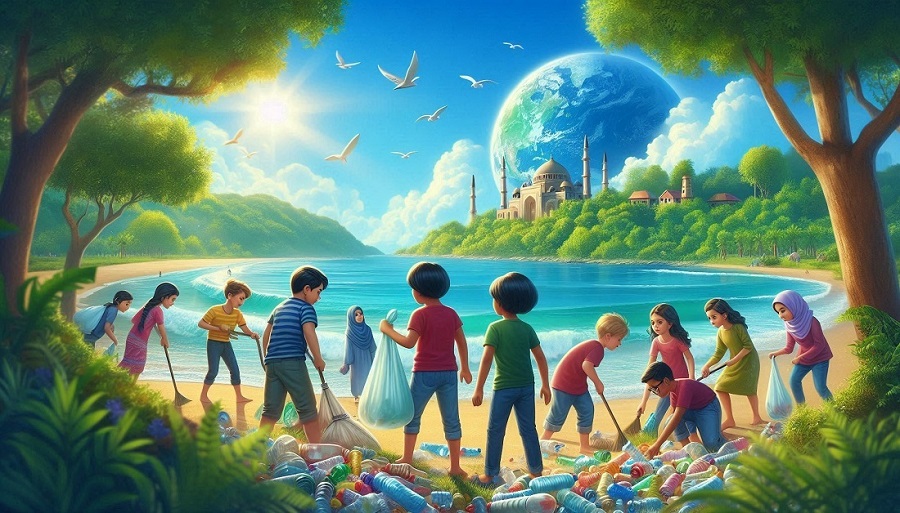
From grocery bags and food packs to everyday household stuff, the use of plastic is widespread in Bangladesh, as it is cheap and convenient. However, this extensive use has resulted in an alarming accumulation of plastic waste in the country. If you walk through any street in the country, you are likely to find plastic litter scattered almost everywhere. You can find these in the form of shopping bags, bottles, wrappers, food containers, straws, disposable cups, cutlery, and various types of packaging materials. Even the surfaces of canals and drains in many places are clogged with floating polythene bags and plastic waste.
Improper disposal, weak waste management, and low public awareness have turned plastic pollution into a growing national crisis. It is a serious threat to public health, biodiversity, and environmental sustainability. It is also accountable for climate change as it emits greenhouse gases throughout its production and disposal processes. Plastics further endanger ecosystems and human health, as they break down into microplastics.
Several scientific studies have detected the presence of microplastics in human arteries, lungs, brains, testis, and livers, even in breastmilk. Studies also indicate that microplastics severely harm marine ecosystems as it contaminates the food chain of aquatic species. Alarmingly, an estimated 11 million metric tons of plastic enter the oceans and around 13 million tonnes accumulate into the soil each year, intensifying this global environmental crisis. The Organisation for Economic Co-operation and Development (OECD) projects that the global plastic consumption amount can reach 516 million tonnes by 2025. This figure is expected to be more than double by 2060, exceeding 1.2 billion tonnes annually. This alarming projection emphasizes the urgent need for coordinated global action to combat plastic pollution.
Today, World Environment Day 2025 is being observed globally under the theme “Ending Plastic Pollution”. It aims to find solutions to beat global pressing plastic pollution. While policy reforms and technological innovations are essential, however, influencing public perception and behavior is equally required. This is precisely where environmental organizations can emerge a powerful catalyst in shaping narratives, raising awareness, and encouraging communities toward meaningful environmental activism through media advocacy tools.
Unlike traditional awareness campaigns, media advocacy uses strategic communication to shape public opinion, frame policy debates, and push for systemic change. It focuses not just on educating individuals but on influencing institutions and policymakers to adopt sustainable policies. In Bangladesh, environmental organizations with their grassroots networks and communication expertise can lead media advocacy campaigns effectively to inform, persuade, and mobilize the public and policymakers.
Globally, environmental organizations initiate various media advocacy interventions to influence communities to minimize plastic waste. For example, Plastic Oceans International uses a storytelling approach, especially through visual media. By producing compelling documentaries they highlight the devastating impact of plastic waste on marine life. Their film activism model not only educates but also mobilizes communities to participate in cleanup efforts. In the USA, the Washed Ashore, a project of the Artula Institute for Art and Environmental Education, transforms ocean debris into massive sculptures to raise awareness about plastic pollution through creativity. These sculptures are displayed in public spaces to engage people. Beyond traditional environmental circles, these artworks serve as tangible reminders of the consequences of plastic waste.
To initiate long term change by educating the younger generation, the Plastic Pirates initiative in Europe involves schoolchildren and youth groups in collecting and analyzing data of plastic waste of rivers, coast or sea. Beside the data gathering, participants can gain ocean and environmental awareness and knowledge on plastic pollution through this citizen project. In Jordan, MicroPlasticsJO works to reduce single-use plastic pollution through environmental workshops and the creation of art and products from recycled plastics. They aim to shift public perceptions about waste and encourage young creators to use upcycled plastic materials sustainably.
In the digital era, social media transcends geographical limitations. It can also enable people globally to share their personal stance against plastic pollution. WWF, a leading environmental charity, collaborated with the digital agency Tug to launch a social media petition campaign “Stop Plastic Pollution” calling the world leaders to form a legal agreement to stop plastic pollution entering oceans by 2030. This effort reached over 9 million users and secured more than 1 million petition signatures during the campaign. Similarly, the SEA Circular initiative in South-East Asia region launched social media campaign “100 Days to #BeatPlasticPollution”. They utilized innovative digital tools such as augmented reality, gamification, and localized toolkits to inspire behavioral change. It engaged over 21 million people across 45 countries, with more than 1.2 million interacting directly with the campaign’s digital content.
In the USA, media coverage significantly influenced policy decisions. For an instance, California’s lawsuit against ExxonMobil for misleading the public about plastic recycling emphasizes the role of the media in holding corporations accountable. Media can amplify such high-profile environmental cases, potentially leading to broader regulatory changes. Grassroots movements are vital for sustainable environmental change. In India, The Jharkhand Biodiversity Board’s anti-plastic campaign mobilizes local communities to clean up plastic waste and promotes awareness through street plays and educational media programs.
The stand against plastic pollution is not just about the disposal of waste, rather it is about shaping public attitudes, transforming the social systems, and mobilizing policy actions. Bangladeshi environmental organizations have made some noteworthy impacts in grassroots and national-level through various anti-plastic campaigns. However, to promote sustainable practices and enhance the effectiveness of their activism, these organizations should further strengthen their interventions. The adaptation and integration of above mentioned media advocacy tools, approaches and strategies successfully used by leading environmental groups worldwide can better prepare the Bangladeshi environmental organizations to fight against plastic pollution.
Writer: Jewel Das
Assistant Professor, Journalism and Media Studies, Port City International University,
Researcher & Environment Activist