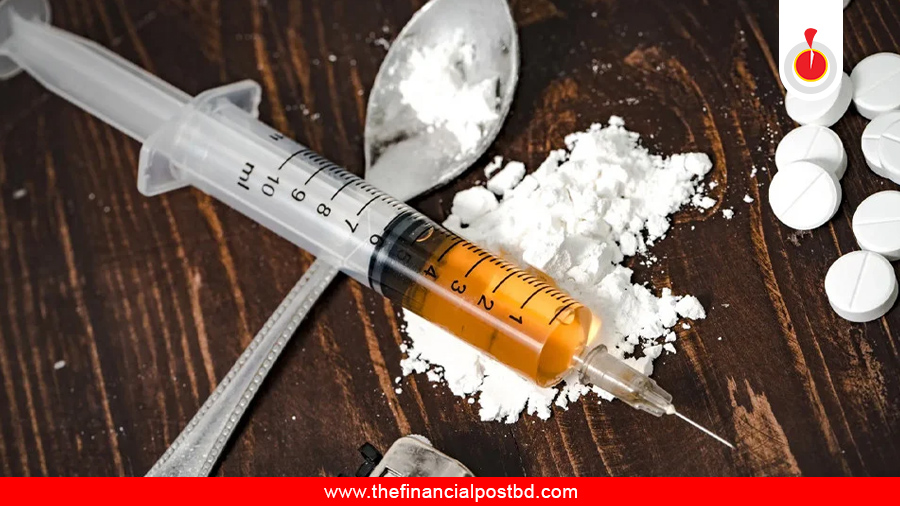
The government’s zero-tolerance policy against narcotics is being enforced across the country through a special joint drive involving police, the Rapid Action Battalion and the Department of Narcotics Control, reports BSS.
Authorities said the operation aims to curb drug trafficking, possession and abuse at the grassroots level.
Drug-related offences are prosecuted under the Narcotics Control Act, 2018, which provides penalties ranging from short-term imprisonment to life sentences and, in the most serious cases, the death penalty.
The law classifies narcotics into three categories. Class A includes substances such as heroin, cocaine, yaba, amphetamine, pethidine, opium and precursor chemicals. Class B covers cannabis, bhang and charas, while Class C includes alcohol, beer, locally made liquor and rectified spirit.
Under Section 36(1), the highest punishments apply to serious offences involving Class 'A' drugs.
Production, processing, carrying, transportation, import-export, purchase, sale, possession or transfer of more than 25 grams or millilitres of heroin, cocaine or morphine-type drugs may be punished by death or life imprisonment with a fine.
The same maximum punishment applies to possession or other specified offences involving more than 400 grams of yaba or amphetamine-type drugs.
Possession of up to 5 grams of Class 'A' drugs carries one to five years' imprisonment, while possession of 5 to 25 grams carries five to 10 years.
For Class 'B' drugs, possession of up to 1 kilogram carries one to three years, 1 to 5 kilograms carries three to seven years, and more than 5 kilograms carries seven to 10 years, along with a fine.
For Class 'C' drugs, possession of up to 50 kilograms or litres may be punished by up to one year; 50 to 500 kilograms or litres by six months to two years; and more than 500 kilograms or litres by two to five years.
Treatment and speedy trial: Consumption of Class 'A' and 'B' drugs is punishable by three months to two years' imprisonment and a fine.
However, under Section 36(4), courts may send drug users to treatment centres instead of imposing imprisonment. Refusal to undergo treatment can result in six months to five years' imprisonment.
Drug offences are cognizable, with strict restrictions on bail. Trials are generally required to be disposed of within 90 days.
Section 57 also empowers mobile courts to impose up to two years' imprisonment for certain offences, while Section 39 provides punishment for abuse of search and arrest powers.
Supreme Court lawyer Advocate Khalid Hossain described the law as "time-befitting," saying its stringent provisions help implement the government's zero-tolerance policy. He also highlighted treatment provisions for users as humane.
DMP Deputy Commissioner Md Akhtar Hossain said regular anti-drug drives are continuing, adding: "Those involved in drugs will not be spared under any circumstances."
FP/F