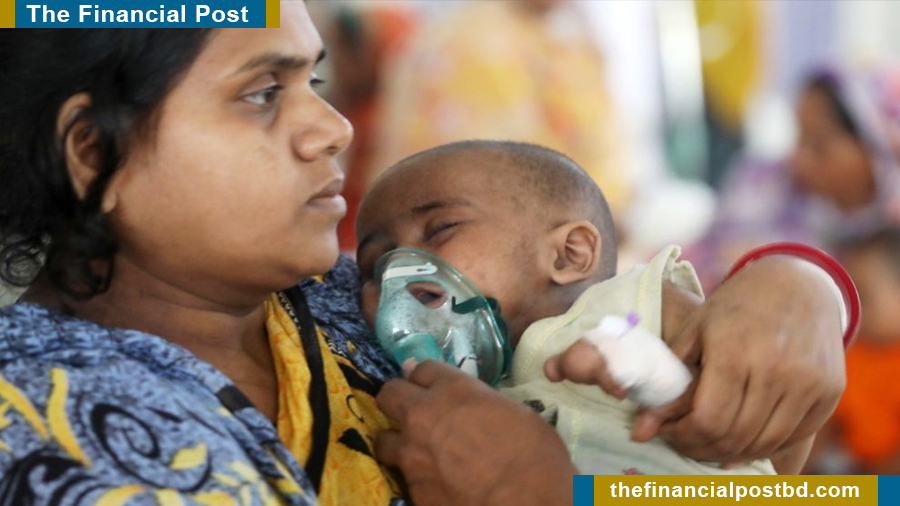
The World Health Organization (WHO) has assessed that the risks from a measles outbreak in Bangladesh is “high,” and warned of "ongoing uninterrupted transmission and severe disease outcomes" if the immunity gaps are not urgently closed.
There was a high risk of measles spreading further through major urban centres and international transit hubs, including the capital Dhaka and the port city of Chattogram, the UN health agency said in an update on Thursday.
The current crisis is largely a result of the stockout of vaccines in 2024 and 2025, and the absence of supplementary vaccination campaigns since 2020, WHO added in the statement.
Overall, the outbreak suggests a reversal from Bangladesh’s previous progress towards measles elimination and highlights increasing vulnerability to sustained transmission. Continued spread is likely unless urgent measures are implemented to strengthen surveillance, rapidly detect and respond to cases, and close immunity gaps through high-quality vaccination activities.
A substantial proportion of cases occurred among children who were either unvaccinated or had received only one dose of measles-containing vaccine. In addition, some children were infected before reaching the age of eligibility for vaccination at 9 months. Most cases (91%) occurred among children aged 1 to 14 years, indicating substantial immunity gaps in this age group.
The concentration of cases among unvaccinated and under-vaccinated children including infants too young to be vaccinated, raises concern for continued uninterrupted transmission and severe disease outcomes, it added.
There are considerable risks of cross-border spread as well, facilitated by cross-border population movement, with major urban centres such as Dhaka, Chattogram, Sylhet, and Cox’s Bazar being important international travel and transit hubs increasing the likelihood of national and international spread, particularly among unvaccinated or inadequately vaccinated travellers.
Measles is endemic across the South-East Asia region. The risk is assessed as high at regional level.
Bangladesh shares extensive land borders with India and war-torn, resources-deprived Myanmar, and population mobility across these borders may facilitate continued transmission, WHO added.
FP/MI


 Bangladesh should avoid over-alignment with any single bloc: Crisis Group
 10% fare hike proposed for lighter vessels after fuel price increase
 Countries move worldwide to restrict social media access for children
 Woman killed after being run over by truck in Jhenaidah
 Mirza Fakhrul denies fuel crisis, says 'situation created artificially'



 12 Feb election established voting rights of people: PM
 Arrest warrant issued against MP Amir Hamza
 Police uniform colours set for another change
 Mobile signals weaken as blackouts, fuel shortages spread
 US announces ceasefire extension with Iran