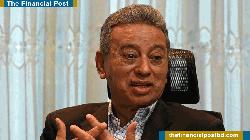
The government has offered the post of deputy speaker to the opposition ahead of the first sitting of the newly elected parliament, Home Minister Salahuddin Ahmed said today.
“We respect the July National Charter and want to begin implementing the political understanding reached through consensus. We have agreed that two deputy speaker posts will be created. One of them will be nominated or elected from the opposition. We are offering that now,” he said while briefing reporters after meeting with the prime minister at the secretariat.
Salahuddin said the offer was made as a gesture of goodwill in line with the July National Charter.
Asked about a reported writ petition seeking to bar the president from delivering the inaugural address on the first day of the session, Salahuddin said he had no knowledge of such a petition.
“I have no idea whether such a writ has been filed. A writ may be filed. Anyone can send a letter,” he said, adding that people had the right to speak freely.
“We have said that for freedom of speech and liberty we have given our lives. People can speak,” he added.
However, he said the constitution, established practice and tradition still require the president to deliver the address on the first day of the first session of a new parliament and at the beginning of the parliamentary year.
“That provision still exists in the constitution. It is also our practice and tradition. So it will be held accordingly,” he said, adding that if any future constitutional amendment changes the provision, it could be considered then.
Turning to constitutional reform, Salahuddin said members who have taken the oath as lawmakers would join the House as MPs, and only they would be entitled to participate in its proceedings.
“There is no provision in the constitution for a Constitutional Reform Council,” he said.
“Those who have taken oath as members of such a council have done so on their own. But they cannot participate in the national parliament in that capacity. Only members of parliament can take part.”
He said discussions on constitutional reform being held in seminars and public forums were part of political rights and anyone could raise demands.
“But we cannot place anything unconstitutional in the national parliament,” he said.
Salahuddin said that if a Constitutional Reform Council were to be formed based on the outcome of a referendum, the matter would have to be discussed in parliament and implemented through a constitutional amendment.
“If a constitutional amendment is brought and incorporated into the constitution, then all aspects must be specified -- who will take oath as members, who will administer the oath and in what form,” he said.
“These are long processes and matters for discussion.”
He said he had learned that a writ petition had been moved in the High Court challenging the July National Charter-based Constitutional Reform Order 2025, claiming it violated the constitution and was ultra vires.
“Let us see what opinion comes from the judiciary. We can take that into discussion in parliament. All such matters will be considered lawfully and constitutionally through parliamentary debate. That is democratic practice,” he said.
On ordinances promulgated during the interim government, Salahuddin said all 133 ordinances were constitutionally required to be placed in parliament on the first day of the session.
“They will be placed. Which ones will be accepted and which ones will not -- that will be decided through parliamentary discussion,” he added.
FP/MI







 Larijani says Iran is prepared for long war
 A war in which all sides lose
 Six appointed as whips in national parliament
 2 Bangladeshis killed, 7 injured in Middle East attacks
 Actor Zaher Alvi’s wife commits suicide
 Bangladesh’s Post-LDC Readiness Boosted by UK Trade Lifeline
 Middle east airspace closure leaves thousands stranded at Dhaka Airport
 Ex-Iranian Prez Ahmadinejad is alive: Adviser
 More than 20 killed in Tehran’s Niloufar Square attack