The government is set to formally launch the much-discussed Family Card programme on August 16, following the successful implementation of its pilot phase.
Prime Minister will inaugurate the programme in its first phase at Ward No. 8 of Latifabad Union under Kishoreganj Sadar Upazila. The government aims to bring approximately 16 million families under the programme within the next four years.
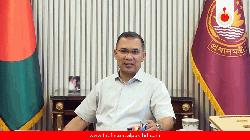
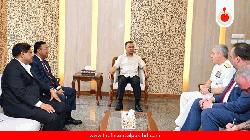
Women and Children Affairs and Social Welfare Minister Prof. Dr. A Z M Zahid Hossain disclosed the information following a meeting of the Cabinet Committee on Family Card at the Secretariat on Thursday. The meeting was chaired by Finance Minister Amir Khasru Mahmud Chowdhury.
He said that the family card programme will be run as a 'dynamic social registry'. That is, as the socio-economic conditions of the people change, the information of the beneficiaries will be updated regularly so that no one who is truly poor is left out and no one who is ineligible is listed.
The Social Welfare Minister said that the real beneficiaries will be selected through information verification at the union level. The government is regularly revising and reviewing information to eliminate the weaknesses that existed in the past in the distribution of allowances and family cards.
Zahid Hossain said that a person can go from poor to lower class, from lower class to middle class, or vice versa from middle class to poor over time. Therefore, instead of a fixed list, a changing information-based system has been kept in this program.
He also said that there will be no scope for giving or depriving anyone of benefits on the basis of religion, caste, tribe or political identity. This program is being implemented as part of the policy of building an inclusive and humane state.
The Social Welfare Minister said that after the inauguration on August 16, data collection and activities will start in every upazila and union of the country by the end of October in phases. Instead of implementing it all over the country at once, it will be expanded step by step.
He also said that a target has been set to bring about 16 million families under the family card within four years. However, this number may increase further based on data collection and evaluation.
Highlighting the importance of reaching the assistance money to women, the Social Welfare Minister said that if the female members of the family spend this money on children's education, nutrition, healthcare, poultry farming, tree planting, cottage industries, sewing and small entrepreneurship activities, it will play a positive role in women's empowerment as well as rural economy and poverty alleviation.
Highlighting the experience of the pilot project, he further said that the program has been conducted on an experimental basis in 56 areas. Although some problems were encountered in data collection in two areas of Jessore and Netrakona, they have been corrected. There were no significant problems in the remaining 54 areas and the error rate was less than 3 percent.
The Social Welfare Minister said that from August 16, data collection will start completely online with a new questionnaire and a new method. If any new errors are detected during implementation, measures will be taken to correct them quickly. A three-tier monitoring system has been established to ensure the transparency of the program.
He further said that government officials will be responsible for collecting data at the union level; no political person will be involved in this work. At the upazila level, a separate committee will work under the leadership of the UNO, at the district level, under the leadership of the Deputy Commissioner, and at the divisional level, under the supervision of the Divisional Commissioner. There is also a high-level committee at the national level.
The Social Welfare Minister said that the Prime Minister himself is regularly reviewing the progress of the program and giving necessary directions. At the same time, the Cabinet Division and the Ministry of Finance will verify the information and ensure that no person can receive multiple allowances or benefits.
Zahid Hossain said that after collecting information from across the country in the first phase, it will be updated every month. As a result, it will be possible to quickly add deaths, changes in socio-economic status or any other changes to the database.
He also said that all information including the program's policies, questionnaires, eligibility and disqualification criteria are open online. In addition, independent research will be conducted through the Finance Department, IMED, and domestic and foreign universities to evaluate the impact of the program. In this case, there is an opinion that at least six months are needed for an effective evaluation.
FP/R