Former Prime Minister Sheikh Hasina will have to face legal procedures under Bangladesh's existing laws if she wishes to return to the country, Law, Justice and Parliamentary Affairs Minister Md Asaduzzaman said on Thursday (July 30).
He said that even a convicted person or a death-row inmate retains the right, as a Bangladeshi citizen, to return to the country and surrender before the law.
However, he added that law enforcement agencies could arrest such a person before any formal surrender if they deemed it necessary.
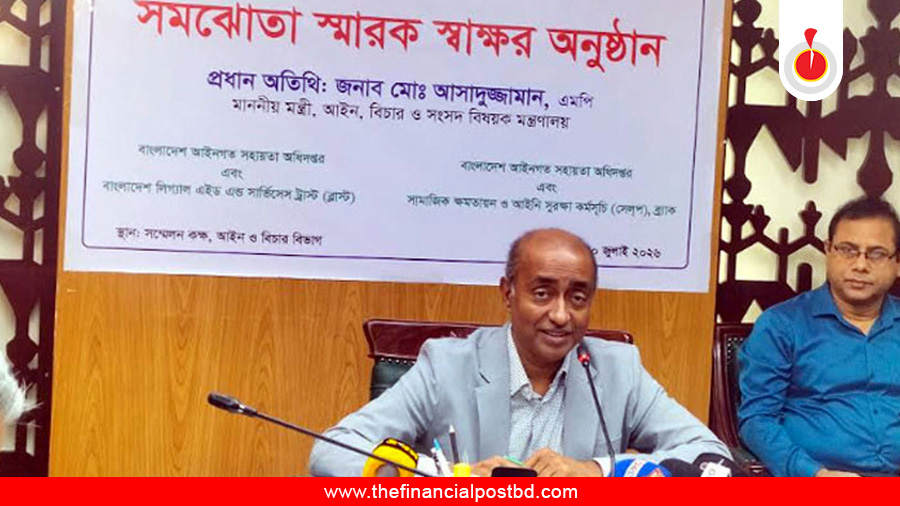
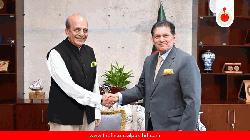
The minister made the remarks at a memorandum of understanding (MoU) signing ceremony organised by the National Legal Aid Services Organisation (NLASO) at the conference room of the Ministry of Law, Justice and Parliamentary Affairs.
Earlier, in the presence of the minister, MoUs were signed between the National Legal Aid Services Organisation and the Bangladesh Legal Aid and Services Trust (BLAST), as well as BRAC's Social Empowerment and Legal Protection (SELP) programme.
Asked about the legal process that would apply if Sheikh Hasina returns to Bangladesh, following remarks in a recent interview suggesting she could return on Friday, Asaduzzaman said the government was taking necessary steps regarding any efforts by the Ministry of Foreign Affairs on extradition matters.
"How a person returns to the country is a matter for that individual," he said. "But once that person comes within Bangladesh's legal jurisdiction, action will be taken in accordance with the law."
The minister said that if Sheikh Hasina enters the country's jurisdiction, the authorities will exercise the powers granted to them by law and legal proceedings will follow their normal course.
Responding to a question about the presidential election, Asaduzzaman said the government had not yet held any formal discussion on the issue.
He noted that under Article 123(2) of the Constitution, a new president must be elected within 90 days of the office becoming vacant.
He said the next session of the Jatiya Sangsad would also be held within the constitutionally prescribed timeframe. As a result, the government does not currently see a need to convene a special session solely for the presidential election, although it retains the option to do so if necessary.
Commenting on a recent observation by international rights watchdog Human Rights Watch, the adviser said the government would not ignore any allegation or observation placed before it.
"If they have made any observation or allegation, it is our responsibility to take it into consideration and examine it," he said. "We will consider the matter seriously and review the relevant issues as necessary."
FP/A