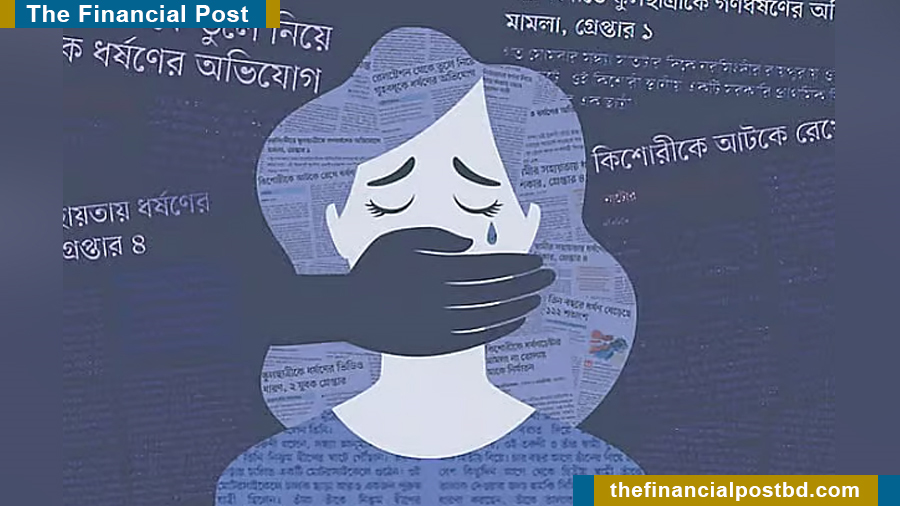
The conviction and sentencing of eight-year-old Ramisa Akhtar’s rape and murder case within just 20 days has brought a measure of relief to a grieving and outraged public in Bangladesh. For many, it has rekindled hope that swift justice in such brutal crimes is possible. Yet it has also triggered a pressing question: why do other similar cases remain stalled for years?
While Ramisa’s case in Dhaka moved rapidly through the courts, the case involving Chattogram’s child Jannatul Naima Ira remains stuck in the judicial pipeline. Families of more than 300 children killed after rape over the past decade are still waiting for justice.
According to data compiled from human rights organisations, more than 6,000 cases of child rape have been officially recorded in the last ten years. Rights groups, however, estimate the actual number is at least double. During the same period, at least 310 children were raped and subsequently murdered.
Most of these cases remain unresolved for years, trapped in procedural delays and judicial backlog. Even in high-profile cases where rapid verdicts were delivered in response to public outrage, outcomes have often been overturned or diluted at higher judicial levels.
Swift trials, uncertain justice
One frequently cited example is the 2017 Madhupur case in Tangail, where a teenage girl, Zakia Sultana Rupa, was gang-raped and murdered in a moving bus. The trial concluded within six months, and three accused were sentenced to death. However, after lengthy hearings in the High Court, all three sentences were commuted to seven-year prison terms.
Similarly, the horrific case of eight-year-old Jannatul Naima Ira from Sitakunda, Chattogram, who was found bloodied in a forest on 1 March, remains unresolved. Police arrested a suspect, Bablu Sheikh, after reviewing CCTV footage, with investigations indicating an attempted rape followed by murder. Yet even after three months, no formal charge sheet has been submitted.
The high-profile murder of Cumilla student Sohagi Jahan Tonu, which shook the nation a decade ago, is still awaiting trial commencement.
In contrast, the 2019 murder of Madrasa student Nusrat Jahan Rafi in Feni resulted in death sentences for 16 accused. Yet even after nearly seven years, the case remains pending hearing in the High Court.
Cases that shook the nation
The brutal rape and murder of eight-year-old child Achiya in Magura last year also led to nationwide protests. Following public outrage, the then legal adviser promised swift justice reforms. The trial concluded within 72 days, sentencing Hitu Sheikh, the father-in-law of Achiya’s sister, to death. However, implementation of the verdict remains pending.
Achiya’s mother, Ayesha Khatun, recently told the media: “We do not understand why the verdict is not being executed. How long must we wait to see his hanging? His two sons have already been acquitted. If delays continue, I fear even he may escape justice.”
Legal observers note a recurring pattern: cases that spark nationwide outrage are fast-tracked in lower courts, but become stalled in appellate proceedings. In some instances, death sentences are reduced or overturned entirely.
Historical records show that even in earlier decades, delays in implementing capital punishment were common. In one 1995 Dinajpur rape and murder case, execution of three convicts took nearly nine years.
Human rights organisations estimate that around 12,000 cases of child abuse have been recorded in the past decade, yet only a fraction have resulted in convictions.
Rising violence against children
According to the Human Rights Culture Foundation (HRCF), cases of violence against women and children continue to rise. In April this year, 312 incidents were recorded, increasing to 326 in May. The organisation warns of a worrying rise in rape, gang rape, rape followed by murder, sexual harassment, and suicides linked to abuse.
Court records show that around 3,000 child rape-related cases are currently pending in Dhaka alone. Police data also indicates that at least 214 rape and attempted rape cases were filed across 50 police stations in Dhaka in the first four months of this year.
In 2025, out of 181,737 total criminal cases, 21,936 were related to violence against women and children.
ASKS decade-long data: thousands affected
Data from the rights organisation Ain o Salish Kendra (ASK) shows that between 2016 and April 2026, at least 11,934 incidents of child abuse were recorded, with 6,135 cases filed.
During the same period, 6,031 children were raped—5,631 girls and 400 boys. At least 310 children were killed following rape.
The year-wise breakdown highlights persistent brutality:
2016: 1,034 abuse cases; 280 girls raped; 16 murdered after rape
2017: 1,055 cases; 470 girls raped; 30 murdered
2018: 1,011 cases; 451 raped; 35 murdered
2019: 1,696 cases; 1,023 raped; 55 murdered (highest in the decade)
2020: 1,718 cases; 1,070 raped; 33 murdered
2021: 1,426 cases; 852 raped; 33 murdered
2022: 1,088 cases; 613 raped; 28 murdered
2023: 1,013 cases; 389 raped; 22 murdered
2024: 670 cases; 270 raped; 25 murdered
2025: 1,024 cases; 504 raped; 22 murdered
2026 (Jan–Apr): 199 cases; 109 raped; 11 murdered
Rights defenders, however, warn that the actual figures may be significantly higher, as many families remain silent due to fear, stigma, and mistrust in the justice system.
According to child rights activist Md Jahidul Islam of Breaking the Silence (BTS), reported cases represent only a fraction of real incidents. He said many families avoid legal action due to social pressure and fear of retaliation, even when support is offered.
He also pointed to weak accountability mechanisms, noting that while high-profile cases receive attention, widespread abuse often goes unaddressed.
Legal delays and loopholes
Supreme Court lawyer Barrister Fahmida Akhtar said that although Bangladesh has strict laws, including the death penalty, weak implementation undermines their effectiveness.
She explained that the lengthy appeal process—covering the High Court, Appellate Division, review petitions, and presidential mercy—creates prolonged uncertainty for both victims and offenders.
This delay, she added, inflicts prolonged psychological trauma on victims’ families and sometimes allows accused individuals to secure bail due to evidentiary gaps or procedural issues.
Calls for systemic reform
National Girl Child Advocacy Forum President Dr Badiul Alam Majumder stressed the need for impartial investigations and speedy trials to uphold the rule of law.
He said justice in Bangladesh is often driven by media attention rather than legal principle, and delayed trials undermine public confidence. Political interference, corruption, and bias in investigations, he warned, remain major barriers to justice.
Without transparent investigations and accountability, he added, crime prevention efforts will remain weak and the rule of law will continue to erode.
Source: Kaler Kantho
FP/MI