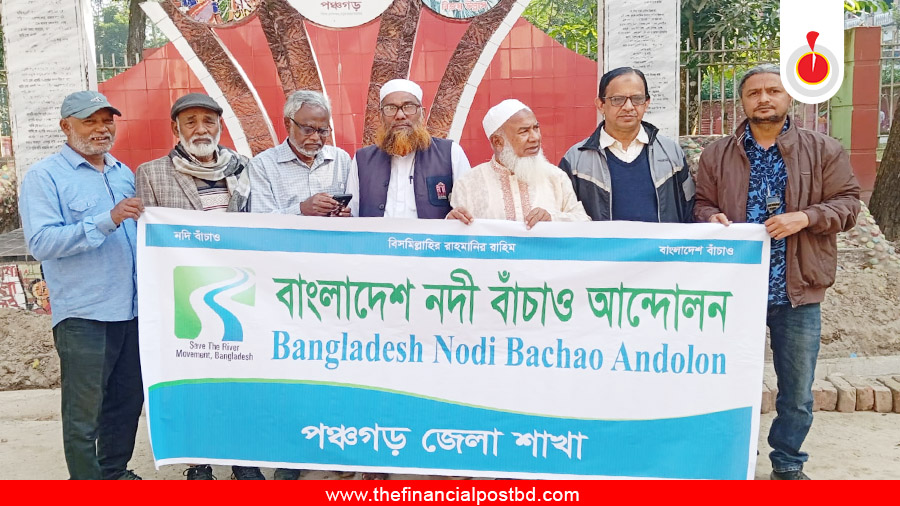
 Collected Photo The Bangladesh River Protection Movement has submitted a memorandum to the Honorable Prime Minister, placing 17 demands for the protection and restoration of the country's rivers, canals, wetlands and other water bodies, as well as the conservation of the natural environment and biodiversity.
The memorandum was submitted at 11:00 am on Wednesday (November 25, 2026) to Assistant Commissioner Asim Chowdhury at the Panchagarh Deputy Commissioner's Office, addressed to the Prime Minister through the Deputy Commissioner.
The delegation was led by Dr. Engineer Md. Lutfor Rahman, former Director General of the River Research Institute and Vice-President of the Central Committee of the Bangladesh River Protection Movement.
Among those present were A.K.M. Fazle Noor, President of the Panchagarh District Committee; Md. Shahadat Hossain, General Secretary; Rafiqul Islam, Organizing Secretary; Jahangir Alam; Md. Sadekul Islam; Hejarul Rashid Pradhan; Md. Abdul Hannan; Md. Shafiullah Ripon; and other organizational leaders, journalists and environmental activists.
Rivers Facing an Existential CrisisThe memorandum describes rivers as among the country's most valuable natural resources and essential components of environmental balance. Rivers support the livelihoods of millions of people and play a vital role in agriculture, fisheries, trade, commerce, transportation and human settlements.
However, unplanned development, river encroachment, pollution, illegal sand extraction, obstruction of natural water flows and the filling of water bodies have pushed many rivers across the country towards an environmental crisis. These activities are seriously threatening biodiversity, agriculture, fisheries and the overall ecological balance.
The memorandum also points out that although various initiatives have been undertaken to protect rivers and water bodies across the country, their effective implementation at the local level remains inadequate.
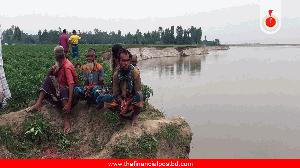
Waterlogging during the monsoon, water shortages during the dry season, declining navigability, illegal encroachment, unauthorized sand extraction and pollution from industrial waste and brick kilns have further aggravated the situation.
Against this backdrop, the organization has called for a coordinated, long-term and effective national strategy to ensure sustainable river conservation rather than relying on isolated initiatives.
The 17-Point Demands
The Bangladesh River Protection Movement has placed the following 17 demands before the government:1. Expert Consultation on River-Related Projects: Before undertaking any river-related project, consultations must be held with a committee comprising experts and representatives from the Water Development Board, Ministry of Agriculture, Department of Shipping, Roads and Highways Department, National River Conservation Commission, River Research Institute and Bangladesh River Protection Movement.
2. Ensuring Continuous Operation of ETPs: Industrial establishments must operate their Effluent Treatment Plants (ETPs) 24 hours a day. Strict monitoring must be introduced to prevent the discharge of untreated industrial waste into rivers.
3. Formation of Permanent Monitoring Committees: Permanent district-level monitoring committees must be established to inspect riverbanks every three months, publish reports and take prompt action to remove illegal encroachments.
4. Restoration of Natural River Flow: Necessary excavation, dredging, removal of accumulated sand and silt, and improvement of drainage systems must be undertaken to restore the natural flow of rivers and water bodies.
5. Re-excavation of Lost and Filled-up Water Bodies: Disappeared and filled-up rivers, canals, ponds and large water bodies must be re-excavated to restore natural water storage capacity and improve access to safe drinking water.
6. Prevention of Illegal Sand and Stone Extraction: Illegal extraction of sand and stones from rivers in haor and hilly regions must be stopped. Effective measures must also be taken to prevent silt accumulation at river mouths and protect fish breeding grounds and aquatic ecosystems.
7. Prevention of Riverbank Erosion: River management, embankment construction and other necessary long-term protective measures must be undertaken according to local geographical conditions to prevent riverbank erosion.
8. Restoration of Important Rivers and Canals: Important rivers and canals in economically significant districts and upazilas must be restored, renovated and re-excavated to protect the country's waterways.
9. Ensuring Unobstructed Natural Water Flow: Unplanned embankments, culverts, bridges and other infrastructure must not obstruct the natural flow of rivers. Appropriate measures must be taken to protect navigation, biodiversity and river ecosystems.
10. Plantation and Protection of Native Trees: Native riverside trees, including Hijal, Tamal, Gab, Banyan and Sheora, must be planted and protected. Special conservation zones should be established to safeguard aquatic animals, fish populations and their natural habitats.
11. Establishment of a Regional River Commission: Initiatives must be taken to establish a South Asian Regional River Commission involving Bangladesh, India, China, Nepal, Bhutan and Myanmar to ensure equitable sharing of transboundary river waters.
12. Ensuring Fair Shares of International River Waters: Bangladesh should support the 1997 United Nations Convention on the Law of the Non-Navigational Uses of International Watercourses and strengthen diplomatic efforts through the Joint Rivers Commission to secure its rightful share of transboundary river waters.
13. Water Recycling in Polluted Rivers: Water recycling systems must be introduced in severely polluted rivers, including the Buriganga, Turag, Shitalakkhya, Balu, Bangshi and Karnaphuli.
14. River Conservation Education and Awareness: Stories, poems and dramas on river conservation should be included in school textbooks. Documentary films should be produced, and training programmes should be arranged for communities living along riverbanks to raise awareness about river protection.
15. Community-Based Fisheries Development: Medium and small rivers, drains, canals and wetlands should be brought under community-based fisheries programmes. Fish eggs, fingerlings and aquatic plants must be protected while creating alternative employment opportunities for local communities.
16. Early Warning Systems in Flood-Prone Areas: Early warning systems must be introduced in flood-prone areas. Initiatives should also be taken to promote high-yielding crop varieties to minimize agricultural losses caused by floods.
17. Prevention of Waste Disposal in Water Bodies: Legal measures and public awareness programmes must be strengthened to prevent the disposal of burnt engine oil, petroleum products, plastic, polythene and household waste into rivers, canals, wetlands, ponds, ditches and coastal waters.
Call for Joint Efforts by Administration and PublicDuring the memorandum submission programme, the organization's leaders said river conservation was not merely the demand of an individual organization but a matter of national interest and a shared responsibility to protect the environment and ensure a safe future for coming generations.
They emphasized that enacting laws alone would not be sufficient to prevent river encroachment and pollution. Effective enforcement of existing laws and regular monitoring must also be ensured. Strict action should be taken against those involved in illegal river encroachment, unauthorized sand extraction and environmental pollution, regardless of their political affiliations or social status.
The leaders further observed that obstructing the natural flow of rivers has serious consequences for agriculture, fisheries, groundwater levels, biodiversity and public health. When rivers dry up or become polluted, it is not only the rivers that suffer; the lives and livelihoods of millions of people dependent on them are also affected.
They stressed that rivers must be treated as living ecosystems and that their natural flow and ecological balance must be protected.
The leaders called upon the local administration to play an effective role in conserving rivers, canals, wetlands and other water bodies in Panchagarh and the northern region of Bangladesh.
They also urged the authorities to conduct regular drives against river encroachment, illegal sand extraction, unauthorized river filling and pollution, while adopting long-term plans for river restoration.
The organization expressed hope that the 17-point demands submitted to the Prime Minister would receive due consideration and that necessary measures would be taken through coordinated efforts involving the relevant ministries, government departments, the National River Conservation Commission and local administrations.
Concluding the programme, the leaders reiterated their message: "If rivers survive, nature survives; if nature survives, humanity survives."
They called upon all sections of society to work together to protect rivers, the environment and biodiversity for future generations.
The Bangladesh River Protection Movement reaffirmed its commitment to strengthening and accelerating its initiatives to protect, conserve and restore the country's rivers.
FP/MIB