State Minister for Fisheries and Livestock Sultan Salauddin Tuku has stressed the need to reduce greenhouse gas emissions while increasing productivity to make Bangladesh’s dairy sector sustainable, profitable and climate-resilient.
“Modern technology, scientific farm management, proper waste utilisation, and improved milk collection and preservation systems are essential to achieving this,” he said.
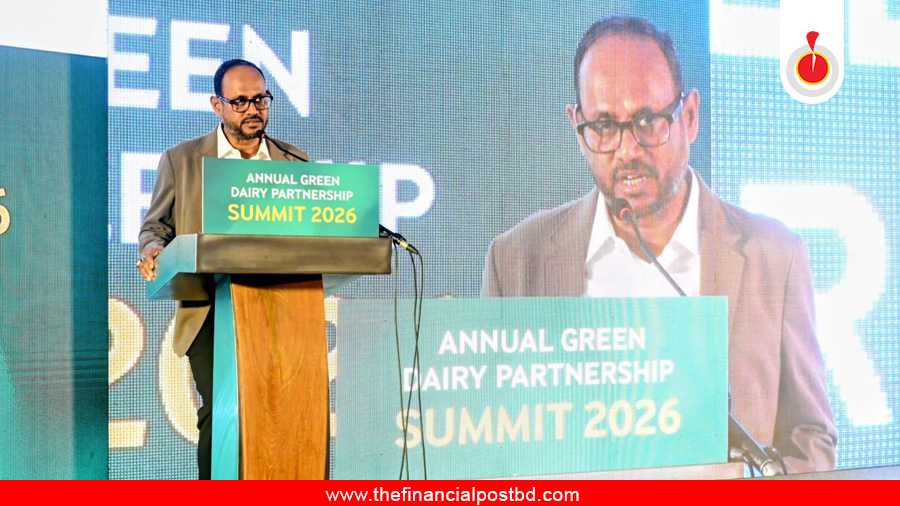
He made the remarks while addressing the Annual Green Dairy Partnership Summit 2026 as the chief guest at Lakeshore Grand Hotel in the capital on Thursday, reads a press release.
The summit was organised under the theme ‘Advancing a Sustainable, Low-Carbon, and Efficient Dairy Sector in Bangladesh’.
Highlighting the sector’s vital role in the national economy, rural livelihoods and nutritional security, Tuku said Bangladesh currently produces around 15.753 million metric tonnes of milk annually against a national demand of 16.279 million metric tonnes.
To bridge the gap, he said equal emphasis must be placed on enhancing productivity, efficient resource management, market development and environmentally friendly farm operations rather than merely increasing production volumes.
The state minister said nearly 1.5 million smallholder farming families earn regular incomes through dairy farming, with rural women playing a crucial role in farm management.
Young entrepreneurs are also creating new opportunities in cattle feed production, artificial insemination, milk collection and agribusiness, he added.
Tuku called for ensuring access to advanced technology, training, financing and markets for farmers, women and young entrepreneurs.
Identifying high feed costs, low productivity, inadequate cold-chain infrastructure and limitations in waste management as major challenges, Tuku said producing biogas and organic fertiliser from cow dung, alongside balanced feeding, scientific breeding and improved farm management, could increase output while reducing environmental pollution.
the state minister further said the government was working to create a supportive policy environment for sustainable dairy development, including implementing the Bangladesh Dairy Development Board Act, 2023, ensuring milk quality and safety, and taking effective measures against adulteration.
He urged development partners and research institutions to work with the Department of Livestock Services (DLS) and the Bangladesh Livestock Research Institute (BLRI) on technology transfer and capacity building for farmers.
Tuku also stressed that dairy processors should expand their milk collection networks and strengthen partnerships with smallholder farmers.
Danish Ambassador to Bangladesh Christian Brix Møller delivered the welcome address.
DLS Director General Md Shahzaman Khan and BLRI Director General Shakila Faruque attended the event as special guests.
Solidaridad Network Asia Country Manager (Bangladesh) Selim Reza Hasan, representatives of public and private organisations, development partners, researchers and dairy industry stakeholders were also present.
FP/A