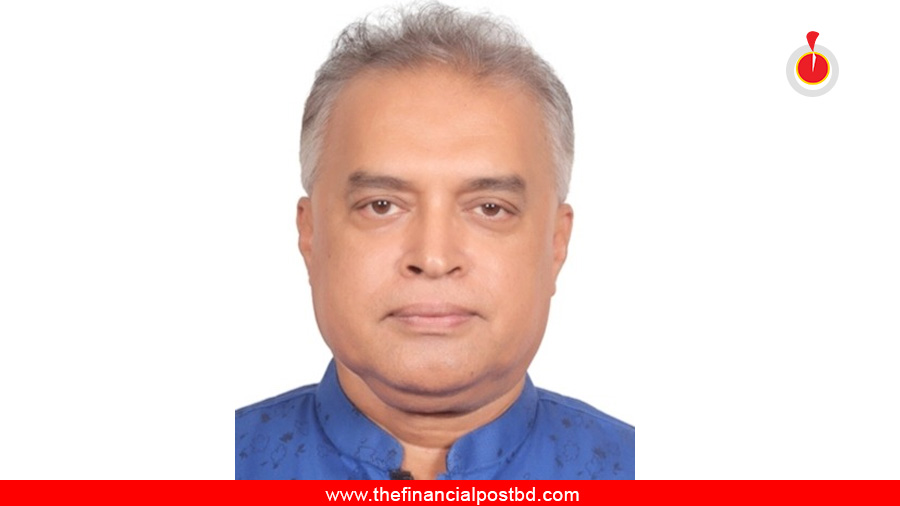
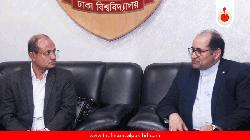
Dr. Rahman’s Youth-Led Action for Lasting Social ChangeDevelopment is often measured by the number of projects completed. For Dr. Md. Arifur Rahman, the true measure is whether people feel heard, protected and empowered to shape their own futures. This belief has guided YPSA from its youth-led beginnings in Sitakunda, Chattogram, to its work addressing Bangladesh’s most pressing humanitarian and social development challenges. Among Dr. Rahman’s many initiatives, YPSA’s work supporting Rohingya communities, reducing disaster risks, promoting the rights of persons with disabilities, amplifying the voices of vulnerable communities and advancing humanitarian action demonstrates its significant contribution to Bangladesh’s development sector.
People at the centre of development
A defining feature of Dr. Rahman's approach is the belief that communities should not be treated merely as recipients of development assistance. Instead, they should be recognised as active participants, rights-holders and agents of change.
This approach has important implications for programme design and implementation. Development interventions become more relevant and sustainable when they respond to the actual needs, experiences and priorities of the people they seek to serve. Local knowledge, community participation and the involvement of grassroots institutions are therefore essential to identifying problems and developing practical solutions.
The philosophy also recognises that poverty is multidimensional. Low income may be accompanied by limited access to education, healthcare, decent employment, social protection and decision-making processes. Addressing these interconnected challenges requires coordinated interventions rather than isolated activities.
YPSA's work across health, education, economic empowerment, human rights and governance, environmental protection, climate change, disaster risk reduction and humanitarian response reflects this broader understanding of development. Its approach seeks to connect immediate community needs with longer-term improvements in social and economic conditions.
Standing with the Rohingya and host communitiesWhen the Rohingya influx began in August 2017, hundreds of thousands of people fleeing Myanmar arrived in Cox's Bazar in need of shelter, food, healthcare and protection. Bangladesh now hosts around 1.2 million Rohingya refugees, alongside roughly 2.8 million local residents in the area. YPSA, which had worked in the district for years, joined the humanitarian response from the outset under Dr. Arifur Rahman's supervision.
Since then, the organisation has continued to support displaced Rohingya families in all 31 camps and the host communities around them. Working with the Government of Bangladesh, UN agencies and international non-governmental organisations, it has delivered humanitarian assistance, healthcare, education, legal support and women's rights programmes in Cox's Bazar and on Bhasan Char in Noakhali. It has also carried out advocacy on the dignity, safety and rights of displaced people.
Its long presence in the area has given YPSA a clear view of the tensions that accompany a prolonged crisis. Rising crime, child marriage, gender-based violence, drug abuse and trafficking are widespread concerns. Many host families fear for their safety and livelihoods, and young people on both sides remain among the most at risk and least served. Response efforts therefore have to address the needs of refugees and local residents together.
Giving communities a voiceDr. Md. Arifur Rahman believes that people have the right to be heard, especially when their lives and livelihoods are affected by risks and injustice. Through YPSA's community radio initiatives, he has created platforms where local people can raise their concerns, share their experiences and advocate for solutions.
As a licensed Amateur (HAM) Radio Operator (call sign S21AV), Arifur has used communication technology during recurrent disasters in Bangladesh's southeastern coastal areas, helping communities stay connected when conventional communication systems failed. This commitment continues through his role as Chief Organizer of Radio Sagor Giri FM 99.2, the first government-approved community radio station in Bangladesh, based in Sitakunda, Chattogram.
Sitakunda is highly vulnerable because of its coastal location and large industrial and ship-breaking activities. Radio Sagor Giri regularly gives local people a voice to report concerns related to industrial pollution, safety, disasters, health and livelihoods. These issues are discussed and shared both through the radio station and its digital platforms, allowing community concerns to reach government authorities and other decision-makers and encouraging action.
One of YPSA's most distinctive responses to these tensions is Voice of Palong, known locally as Palonger Hota, a community radio initiative in Ukhiya, close to the Kutupalong camp, one of the largest refugee settlements in the world. Voice of Palong applies the same principle in Cox's Bazar as Radio Sagor Giri. It broadcasts local news and alerts on natural disasters, and produces audio dramas and programmes on social cohesion, health, gender-based violence and women's rights. It is also active on Facebook and YouTube, where it builds understanding between communities, and it trains young people in communication and mobile journalism. Events bringing refugees and host communities together complete its approach.
The intended results are practical: more peaceful coexistence, stronger mutual trust, new skills among young people and more positive attitudes towards women, children, older people and persons with disabilities.
Responding to vulnerability through practical actionDr. Rahman's development philosophy has also been shaped by the realities of Bangladesh's disaster-prone coastal communities. The devastating cyclone of April 1991 marked a significant moment in YPSA's development journey. The involvement of its youth volunteers in emergency response, relief and rehabilitation brought them into direct contact with the challenges faced by disaster-affected families.
Such experiences demonstrated the importance of connecting humanitarian assistance with longer-term recovery and resilience. Emergency relief can save lives, but sustainable recovery also requires livelihood opportunities, stronger community institutions, disaster preparedness and protection for people who are particularly vulnerable.
For coastal communities, climate change increasingly complicates these challenges. Cyclones, flooding, erosion and other environmental pressures can disrupt livelihoods, displace families and push children into hazardous work or other forms of exploitation. Addressing these interconnected risks requires development strategies that combine climate resilience, social protection, skills development and access to decent employment.
This approach is particularly significant for communities in Chattogram and Cox's Bazar, where environmental vulnerability intersects with economic insecurity, informal employment and the pressures of population movement. Interventions must respond to these realities while strengthening the capacities of both affected families and the communities that receive them.
YPSA promotes disaster preparedness and climate resilience very strongly across Chattogram, Cox's Bazar and other coastal areas. Its work includes early warning systems, landslide risk research, training for community volunteers and school safety planning, after risk actions. It also runs Meteorological Clubs that help children understand weather forecasts. Together, these efforts aim to protect lives, livelihoods and essential household resources before a disaster arrives. Two important current disaster risk projects are the SURAKKHA Project, which focuses on scaling up multi-hazard anticipatory action in hilly regions of Bangladesh and hosts multi-hazard early warning and nature-based solution workshops, and the Child-Centered Anticipatory Action Project, which aims to reach roughly 50,000 individuals.
Disability rights and inclusionDr. Md. Arifur Rahman's commitment to the rights and inclusion of persons with disabilities has been a consistent part of his work. Under his leadership, YPSA serves as the focal organisation for the Digital Accessible Information System (DAISY) in Bangladesh, helping make books and other digital information accessible to people who are visually impaired or print-disabled. This work supports their right to information, education and full participation in society.
Recently, at an event titled "Youth, Startups and Bangladesh of Potential," Bangladesh's Prime Minister, Tarique Rahman, was presented with YPSA's "Multimedia Talking Book" and "Accessible Dictionary." These innovative initiatives aim to make education more inclusive and technology-driven for students with visual impairments.
After learning about the initiatives' features and potential, the Prime Minister praised the efforts to make educational resources more accessible. He also commended the initiative to modernise education for visually impaired students through information technology and received research publications related to the innovations.
Dr. Arifur Rahman's involvement with the National Forum of Organizations Working with the Disabled (NFOWD) further reflects his commitment to disability rights as an issue of equality and dignity, not charity. He has also carried this commitment into his academic work. His doctoral research on the role of NGOs in advancing financial inclusion for persons with disabilities in Bangladesh connects his practical experience with research aimed at promoting more inclusive economic opportunities, policies and systems.
People at the centre of developmentDr. Rahman's approach rests on the belief that communities are rights holders and agents of change, not merely recipients of aid. His doctoral research examined how non-governmental organisations can promote financial inclusion for persons with disabilities in Bangladesh, a subject that reflects his concern for those who have long been excluded from financial services and livelihood opportunities.
This thinking runs through YPSA's recent work. Programmes are designed with local knowledge, delivered through partnerships with government and development partners, and linked to wider advocacy so that community experience can inform institutional reform. Skills training, awareness raising and income support are most effective when accompanied by efforts to address discrimination, unsafe conditions and unequal access to services.
Youth remain central to this effort. From its origins as a youth initiative, YPSA has continued to involve young volunteers, communicators and community leaders in identifying problems and finding solutions. In a country with a large young population, this offers both an opportunity and a responsibility.
A continuing vision for inclusive BangladeshDr. Md. Arifur Rahman's journey with YPSA illustrates how a locally rooted youth initiative can evolve into a broader platform for social development. Its experience also underscores a fundamental lesson: meaningful development begins by listening to people, understanding the conditions that shape their lives and creating opportunities for them to participate in decisions about their futures.
As Bangladesh confronts persistent inequality, climate vulnerability, changing employment patterns and the need for more inclusive institutions, this people-centred philosophy remains relevant. The challenge is to translate vision into measurable improvements in people's lives while ensuring that disadvantaged communities have a meaningful voice in shaping development priorities.
Ultimately, the success of a development leader is not measured only by the number of programmes implemented or institutions established. It is also reflected in whether people gain greater control over their lives, whether vulnerable groups can exercise their rights, and whether communities become better equipped to withstand adversity and pursue new opportunities.
The enduring significance of Dr. Md. Arifur Rahman's development vision lies in this connection between participation, empowerment and sustainable social change. By placing communities at the centre of development, strengthening local capacities and linking practical action with broader institutional reform, YPSA's experience offers a perspective on how social development can contribute to a more equitable, inclusive and resilient Bangladesh.
FP/A