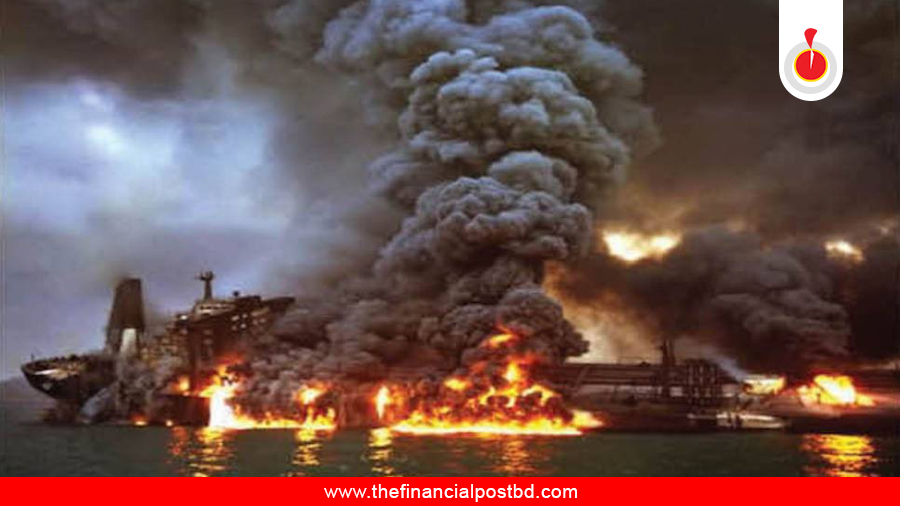
An oil tanker in the Strait of Hormuz, which had turned off its radar system, exploded after hitting a mine in the Strait of Hormuz, Mehr News Agency and Al Jazeera reported.
A violating oil tanker in the Strait of Hormuz, which had deviated from the route designated by the Islamic Republic of Iran, exploded after hitting a naval mine.
This incident occurred while the Islamic Republic of Iran had previously warned time and again that ships departing from the designated route would face consequences and repercussions for them.
Preliminary reports show that the tanker deviated from the corridor designated by Iran and was located in an area outside the safe maritime traffic route, despite previous warnings.
The Islamic Republic of Iran has emphasized its sovereign rights over the strategic waterway.
The reported sea mine blast in the Strait of Hormuz reflects two possible meanings for the Iran war, says defence analyst and retired Romanian navy officer Alexandru Hudisteanu.
Tehran may be testing whether Washington still has an appetite to strike while also signalling US demining efforts in the strait aren’t effective, reinforcing the idea that only the IRGC’s approved corridor is safe.
Asked if the explosion could be an accident, Hudisteanu said it’s too early to tell with only Iranian sources reporting the incident so far. He noted sea explosives can break loose or submerge just beneath the surface, becoming undetectable.
On a likely US response, he said Washington appears to have reached a “temporary limit on military options” because strikes alone haven’t shifted Iran’s stance. The US may now favour a “window of calm” to let talks continue while still showing it can resume attacks.
Hudisteanu also pointed to the collapsed US-Iran memorandum of understanding, under which Iran was meant to handle demining. With Iran’s conventional navy largely destroyed, Hudisteanu argued Tehran can’t properly secure the strait and is instead using that to justify its own transit corridors.
FA/R